
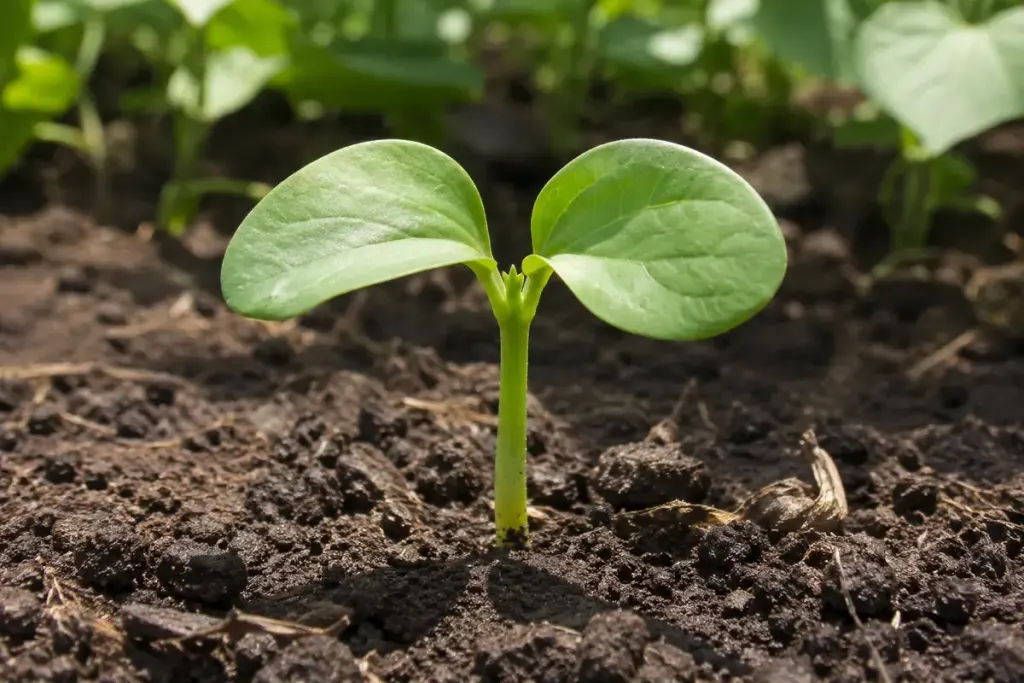
A seedling pushes a curved stem above the soil, then raises two thick leaves that look different from the foliage it will produce later. In epigeal germination, the cotyledons, or seed leaves, are lifted above the soil surface.
University of Minnesota Extension’s soybean growth guide gives a clear example. The elongating hypocotyl brings the cotyledons to the surface; they support early development before the later leaf sequence becomes established. Other species follow different emergence patterns, so this example should not become a rule for every seed.
Follow one seedling over several days
Choose a labelled plant and photograph it from a consistent position without pulling it out. Record the date of sowing, first visible emergence and the appearance of the next leaves. A sequence is more informative than a single picture of an unfamiliar shape.
Sketch the cotyledons separately from the true leaves. Notice their position and shape rather than identifying them only by size. In soybean, the later development includes a specific progression of leaf types; a bean or another crop may not follow exactly the same pattern.
Do not remove the seed leaves because they look unlike the adult foliage. Their early role is part of the seedling’s development. If a seed coat appears stuck or the plant looks damaged, seek crop-specific advice before trying to free it by force.
Connect observation with the sowing instructions
Use the recommended sowing depth and medium for the species. A seedling that must lift its cotyledons through the soil faces a different emergence task from one whose cotyledons remain below ground. This helps explain why “plant every seed deeply” is not useful general advice.
Keep moisture and other growing conditions appropriate to the crop rather than repeatedly disturbing the soil to check progress. If emergence is poor, record the conditions and examine possible causes systematically.
Learning the term epigeal gives a name to something visible. The more valuable skill is following the plant’s sequence closely enough to distinguish ordinary development from a problem that needs investigation.