
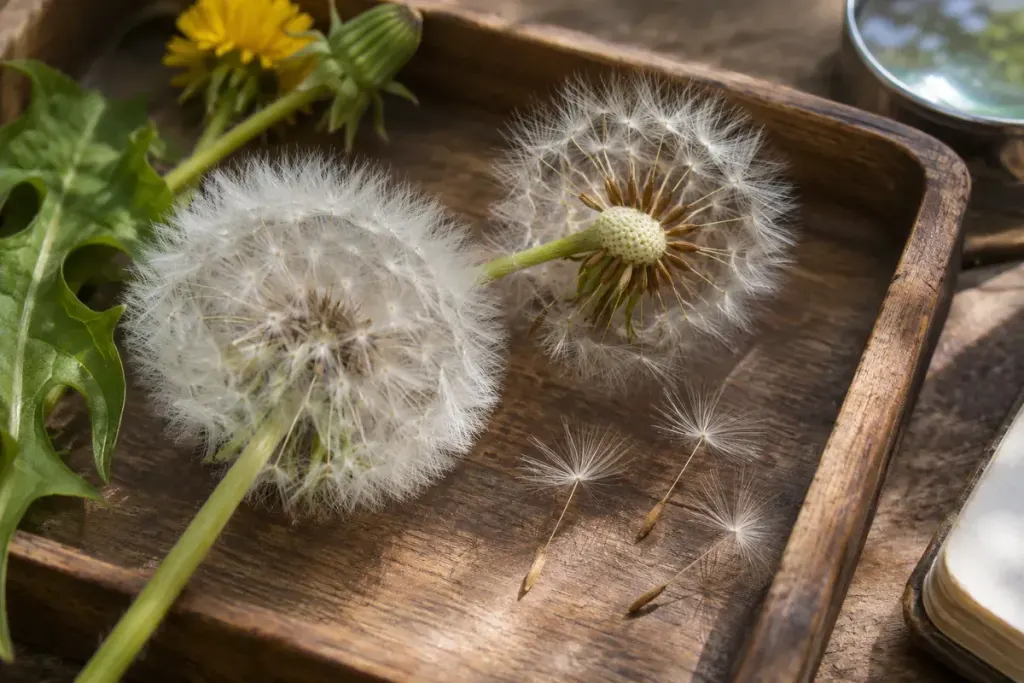
Growing a plant from seed usually brings sexual reproduction to mind: genetic contributions are combined, and the offspring may differ from the parent. Apomixis complicates that familiar picture. It allows asexual seed formation, with an embryo developing without the usual fertilisation process.
The details vary between plants and forms of apomixis. In some cases, development of other seed tissues can still involve pollination or fertilisation. “Asexual seed” should therefore not be stretched into a claim that every reproductive step is identical across species.
Look at a documented example
Kew’s scientific information on common dandelions notes the importance of apomixis in many British dandelions. This helps explain why a plant can produce seed without following the simple two-parent story often used in introductory gardening explanations.
It does not mean that every dandelion everywhere has the same reproductive biology. Identification, geographic context and the source’s scope still matter.
Why crop researchers are interested
The Sundaresan laboratory at UC Davis studies synthetic apomixis as a way to preserve useful hybrid combinations through seed. The attraction is that a favourable genetic combination might be maintained rather than reshuffled in the next generation.
That research goal is different from a blanket promise about commercially available seed. A successful experimental system does not establish that every crop, variety or growing condition can use the method reliably.
Keep the growing record specific
For a home or small-farm record, identify the species and variety, where the seed came from and what the supplier says about propagation. Do not assume that a seedling is genetically identical to its parent simply because it looks similar during its first few weeks.
An illustrative comparison could record several seedlings’ growth and flowering traits over time. Such observations may raise useful questions, but appearance alone cannot confirm the reproductive mechanism or genetic identity.
Apomixis is valuable as a reminder that “from seed” describes a starting material, not one universal inheritance pattern. Understanding the particular plant’s biology helps make sense of what seed saving can preserve, what it may change and which claims still need stronger evidence.