
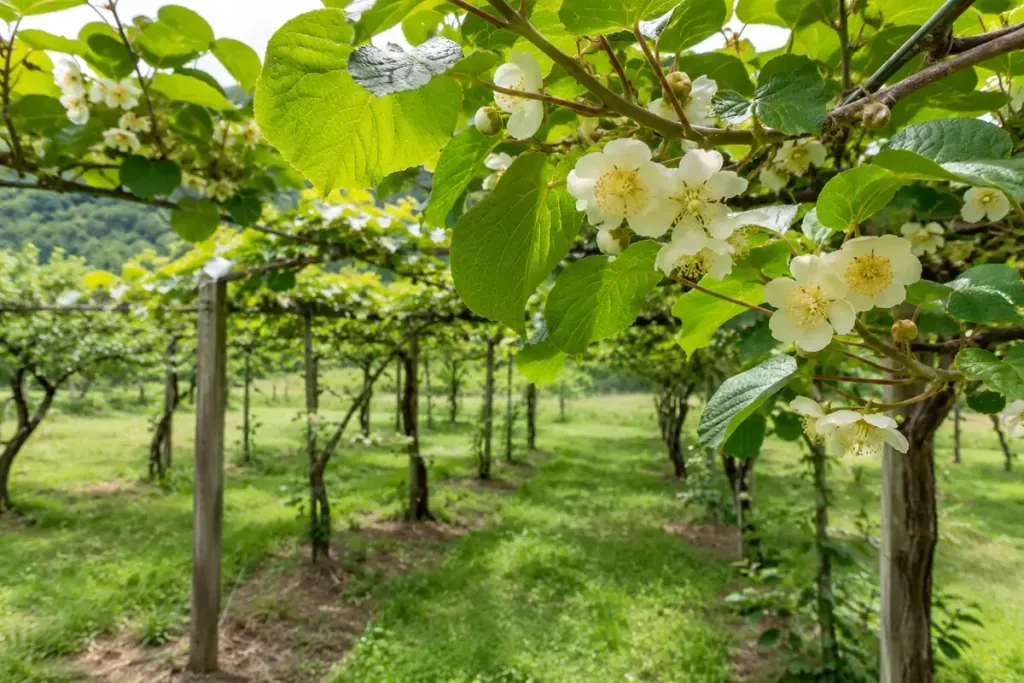
Buying a healthy fruiting plant is not always enough to establish a productive planting. In a dioecious species, male and female flowers occur on separate plants. A planting plan therefore needs to consider the source of suitable pollen as well as the plants expected to bear fruit.
The University of Minnesota Extension’s commercial kiwiberry guidance provides a crop-specific example. It discusses male and female vines, cultivar selection and pollination arrangements. Its regional recommendations should not be turned into a universal planting ratio for every dioecious crop or climate.
Check the label against the intended role
Confirm the species and cultivar, whether the plant is intended to produce pollen or fruit, and whether its flowering period overlaps that of the proposed partner. A nursery claim of self-fertility also needs to be checked for the particular cultivar and growing conditions rather than extended to the whole crop.
The terms can be confusing: a pollinizer is the plant supplying pollen, while a pollinator is an agent such as an insect moving it. Adding a pollen-producing vine and supporting pollinating insects address related but different parts of the process.
Plan before replacing a disappointing plant
For an illustrative garden record, draw the position of each vine and attach its label information. During flowering, record which plants actually flower and whether the periods overlap. A map with observations is more informative than a note saying “several vines, no fruit”.
Lack of fruit is not proof of a pollination problem on its own. Plant maturity, weather, growing conditions and other factors may also need investigation. Use crop-specific advice from a suitable local extension or horticultural service before deciding what to replace.
A good purchase list includes the role of each plant and the evidence that the combination is appropriate. That small planning step can prevent a row of individually attractive plants from becoming a collection with an unresolved pollination gap.