
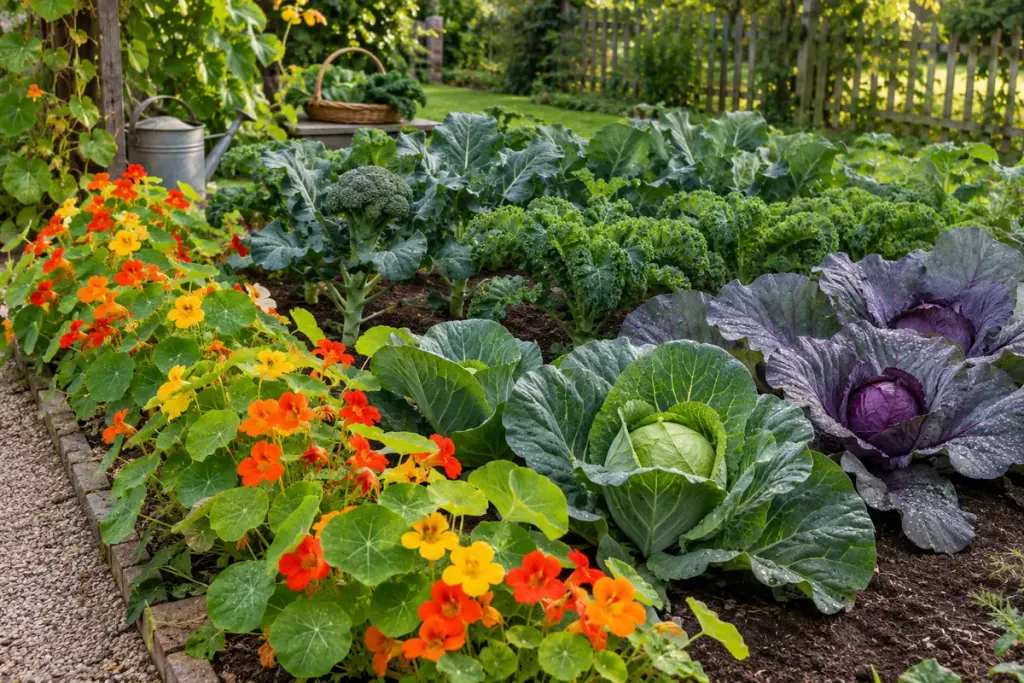
A plant covered in pests at the edge of a vegetable bed can be either a warning or part of a deliberate plan. Trap cropping aims to draw a particular pest towards a more attractive plant and away from the crop you want to protect. The important word is “particular”: a border does not become a universal pest barrier because it contains flowers.
University of Minnesota Extension’s companion-planting guidance discusses trap cropping within the wider subject of mixed planting. Choose combinations supported for the pest and crop involved, rather than treating a social-media plant pairing as a general rule.
Decide what happens after attraction
The trap plant still needs observation and management. If the pest can multiply there and move into the main crop, simply attracting it has not solved the problem. Before planting, identify who will inspect the border, how often it can realistically be checked, and what action will follow the findings.
The Oregon State Extension PAMS framework places monitoring alongside prevention, avoidance and suppression. That is a useful way to organise the project: the planting arrangement does not replace identification or follow-up.
Keep a small trial readable
For a garden-scale experiment, draw the bed layout and note planting dates. Record the pest you actually observe, the part of the plant affected and the damage in both the trap planting and the main crop. Photographs taken from the same position help distinguish a changing infestation from a changing camera angle.
A nearby untreated comparison can be informative, but one garden season is not enough to prove a universal result. Weather, planting dates and neighbouring vegetation can all differ. Seek local extension advice if identification is uncertain or losses are becoming significant.
A practical trap-crop plan therefore ends with a management decision, not a decorative border. Choose the target first, then choose the planting and the follow-up that make sense for it.