
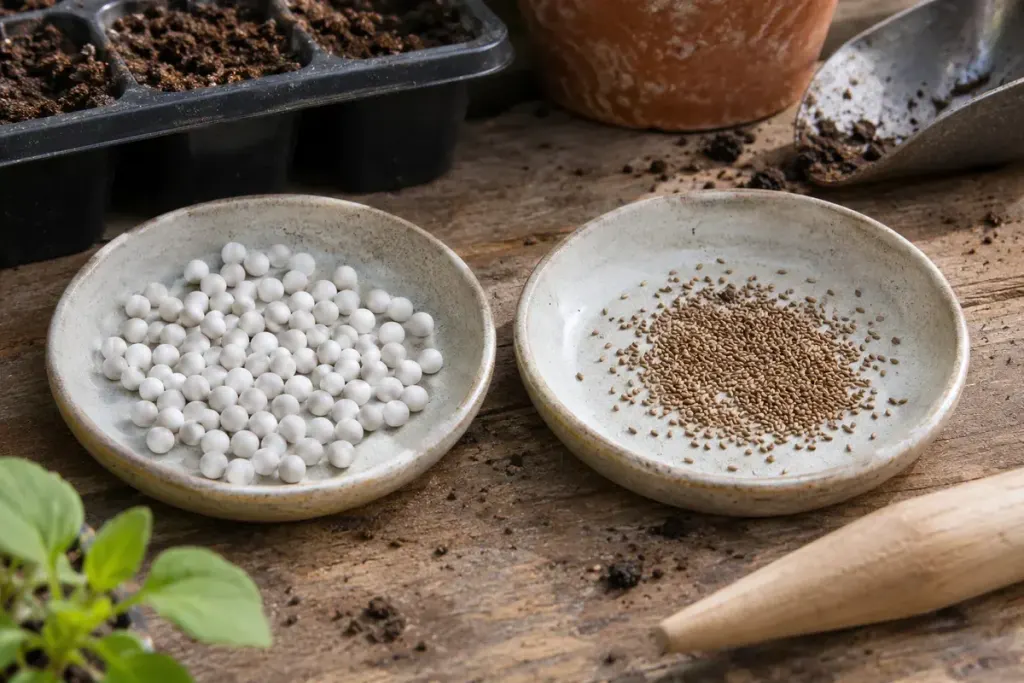
A tiny seed can become a much more manageable unit when enclosed in a pellet. The coating makes it easier to see and place, which is especially useful when sowing individual cells. It does not mean the seed no longer needs appropriate moisture, temperature and light.
Johnny’s Selected Seeds’ technical sheet explains that pelleted seed needs consistent, moderate moisture during germination. A coating that starts to split and then dries can interfere with emergence, while waterlogging can also hinder the seed.
Read the pellet and the crop separately
The pellet helps handling; the crop still determines the appropriate sowing depth and growing conditions. Follow the specific packet rather than assuming every rounded pellet should be buried at the same depth.
Prepare the medium before sowing so the first watering is controlled. After placing the seed, check the surface regularly rather than waiting until the whole tray looks dry. Use the supplier’s guidance to manage moisture without leaving the medium saturated.
Make a small comparison useful
If you are trying a pelleted version for the first time, label the crop, variety, lot and sowing date. Record the conditions and emergence. Comparing an old packet in a cold windowsill tray with fresh seed under different conditions will not isolate the effect of pelleting.
Keep unused seed in its recommended storage conditions and pay attention to the supplier’s shelf-life guidance. Johnny’s advises using its pelleted seed within a year of purchase; that is supplier guidance, not a universal expiry date for every product sold elsewhere.
Pelleting and chemical treatment are also different concepts. Check the product information for any treatment and handling instructions rather than inferring them from the coating’s colour.
The main benefit is more deliberate placement. To turn that into a good stand of seedlings, pair the easier handling with a consistent germination routine and records that make any failure easier to investigate.