
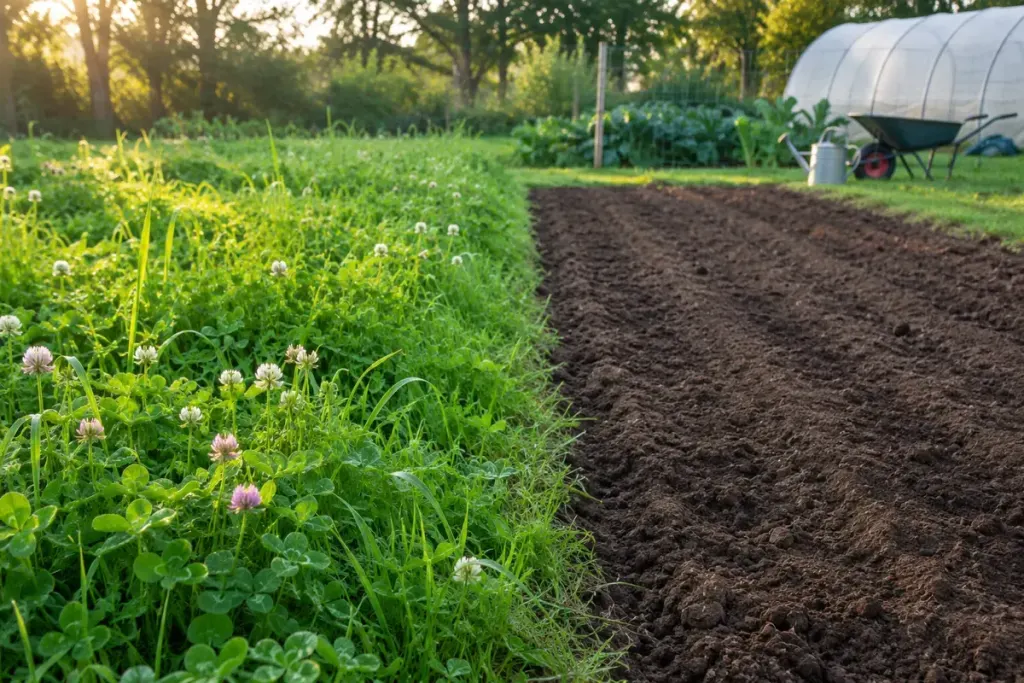
A successful cover crop can become an awkward neighbour for the next crop if its end date was never planned. By spring, the stand may be taller, wetter or tougher than the available equipment can comfortably manage. Choosing the seed and deciding how to finish the stand belong in the same conversation.
SARE’s guidance on cover crops in conservation tillage explains why termination timing affects moisture, temperature, residue and the following crop. There is no single calendar interval that fits every species, climate and planting method.
Work backwards from the next planting
Write down the intended cash crop, expected planting window and the conditions needed for establishment. Then ask what the cover crop will probably look like at that point. A method that works on a young stand may not work the same way after stems become woody or seeds develop.
For a small growing area, a planning sheet can be simple: species, sowing date, expected growth stage, intended termination method, tools available and the latest sensible decision date. Add a place for the actual result. The purpose is to reveal a missing step before the planting window arrives.
Do not assume mowing will kill every cover crop. Some species regrow, while the success of rolling or other mechanical methods depends on growth stage and equipment. Choose a locally supported method and seek qualified advice before using herbicides; crop labels and local rules control their use.
Plan for the material left behind
Termination does not make the biomass disappear. Decide whether the following crop will be planted through residue, into cleared strips or after an appropriate incorporation process. Inspect whether the planter or hand tools can place seed at a consistent depth without dragging a mat into the row.
University of California’s management considerations also emphasise the relationship between establishment, termination and the subsequent crop. Use regional guidance as context, rather than copying a date from a farm with different soil and rainfall.
Keep an alternative ready if access becomes too wet or growth advances faster than expected. After planting, record emergence, residue problems and any regrowth. Next season’s decision will be better when it draws on your field’s outcome, not just a photograph of an impressive green stand.