
A packet marked “primed” contains seed that has received more than a coating or a new label. The treatment starts some of the processes associated with germination before the seed reaches your growing bed.
The Seed Biotechnology Center at UC Davis explanation, hosted by SeedQuest, describes controlled moisture and temperature conditions followed by drying. The process advances early activity without allowing ordinary seedling emergence to proceed. Primed seed can then be handled and sown as seed.
Earlier emergence is the aim, not a guarantee
The intended benefit is faster, more uniform emergence compared with untreated seed from the same lot. That does not remove the crop’s requirements for suitable soil, moisture and temperature. A prepared seedbed still matters.
Nor should “primed” be interpreted as a general instruction to soak the packet again. Commercial treatment and on-farm soaking are not interchangeable recipes. Follow the supplier’s directions for that crop and product, especially where seed is coated or otherwise treated.
Read the storage note before buying ahead
South Pacific Seeds’ guidance explains that priming can reduce viable storage life and gives specific handling advice for its products. Those times and temperatures should not be copied blindly to every seed supplier. Ask how long your particular lot can be kept and under what conditions.
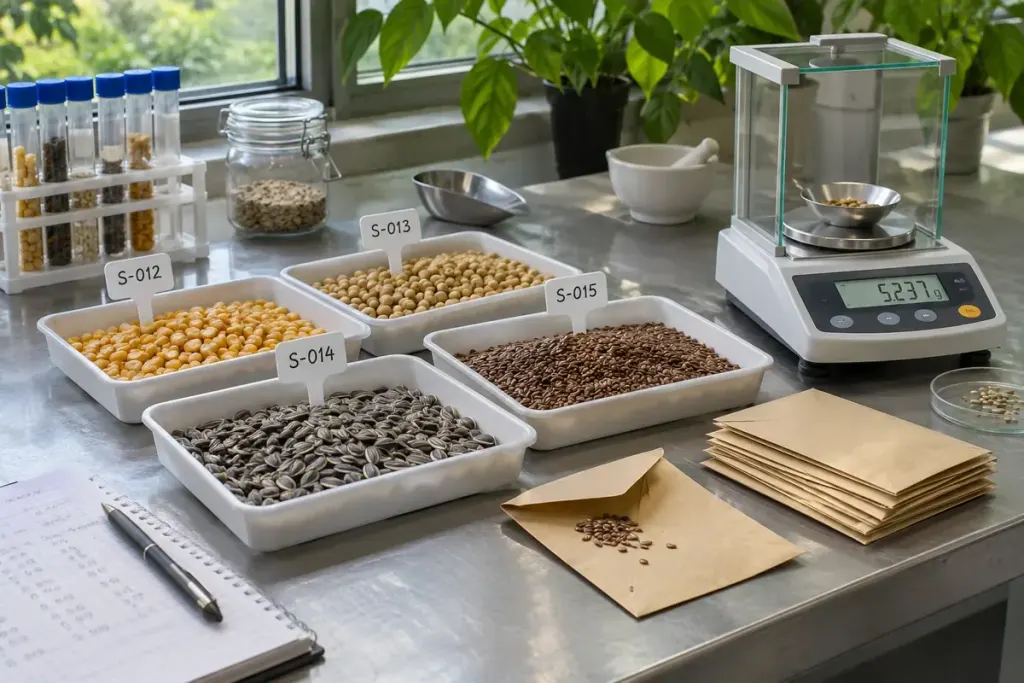
For a small comparison in your own garden, label equal-sized sowings clearly and keep other conditions as similar as possible. Record the seed lot, treatment, sowing date and daily emergence count. Do not compare different varieties and attribute every difference to priming.
A useful note might show that one group emerged over three days while another emerged over six. That is an observation from that sowing, not proof of a universal yield increase. Continue recording establishment and later growth if those are the outcomes you care about.
Buy primed seed with a sowing plan, not simply because the label sounds more advanced. Its value is easiest to assess when you know which establishment problem you want it to address.