
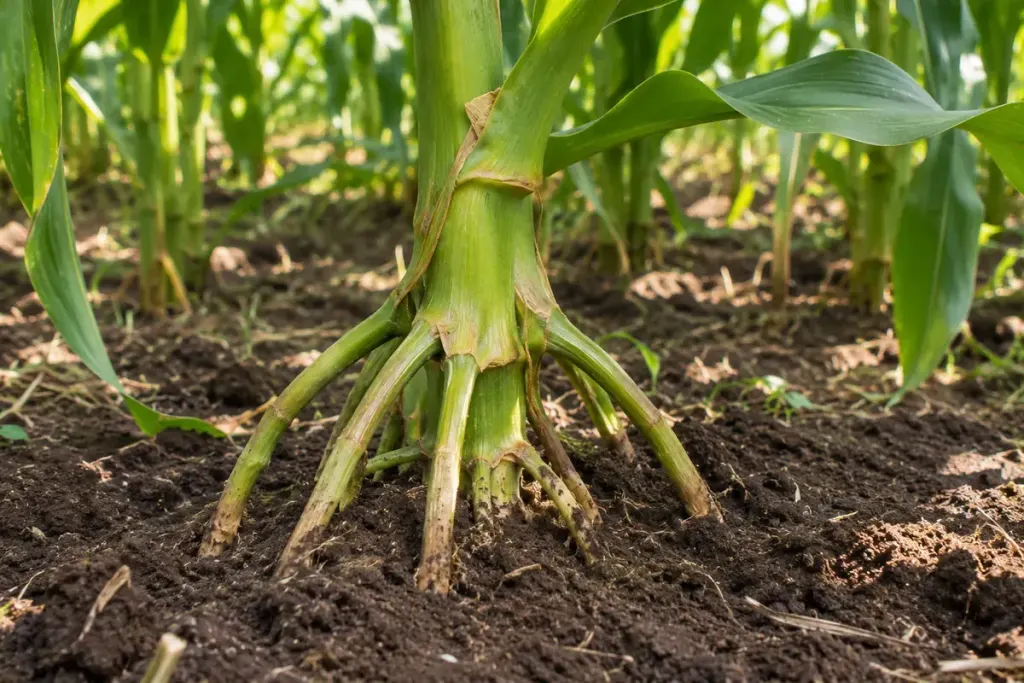
The thick roots emerging from the lower stem of a maize plant can look as though they have started in the wrong place. These above-ground nodal roots are commonly called brace roots. Their position makes them particularly easy to observe as the crop develops.
Follow the root to the ground
Notice which whorls have reached the soil and which remain above it. A visible root is not necessarily providing the same anchorage as one established in the ground. Soil conditions, plant development and the structure of the root system all affect the support available to the plant.
Cornell’s crop pest-management training guide discusses root damage and lodging, including feeding on brace roots. It provides context for why the condition of roots matters; it is not a basis for diagnosing an insect problem from a distant photograph alone.
Make an observation record
Choose a few representative plants along an agreed field route. From the surface, record whether the stems are upright, whether brace roots enter the soil and whether obvious damage is visible. Photograph the same view with a date and location reference that you can repeat.
Do not pull on the stem to test its strength or dig around roots simply to produce a better photograph. A non-destructive observation is more useful when it does not change the condition you are trying to follow.
Separate root lodging from a broken stem
A plant leaning from its base presents a different observation from one with a snapped stalk. Record where the change occurs and what weather preceded it. Avoid reducing every leaning plant to one cause: wind exposure, root condition, soil moisture and other factors may interact.
If an area of the crop shows a developing problem, take the record to a local agronomist or extension adviser. Include the crop stage and field pattern rather than only a close-up of one damaged plant.
Brace roots are a useful doorway into reading the whole plant. Following their development can help you ask better questions about establishment and support, while keeping the distinction between what you observed and what still needs diagnosis.