
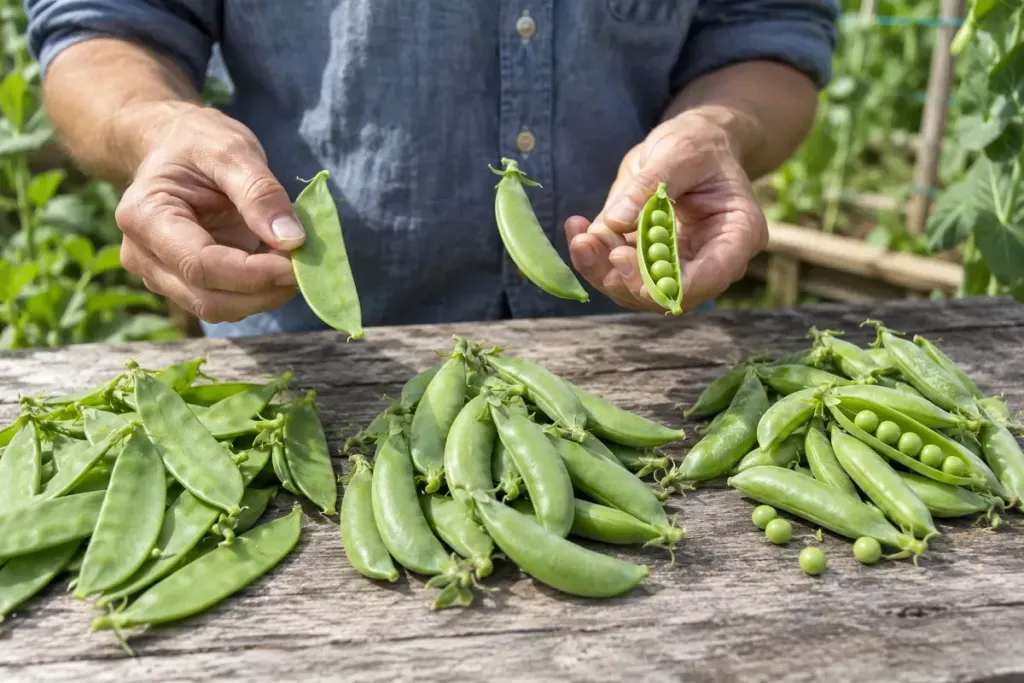
A full pea pod can be a welcome sight, but fullness is not the same harvesting signal for every pea. Before deciding whether to wait another day, check which type you planted and which part you intend to eat.
The RHS guide to growing peas distinguishes shelling peas from edible-podded types. Variety information on the seed packet helps turn that distinction into a practical harvest decision.
Shelling peas: the peas inside are the main harvest. Look for pods that have filled appropriately for the variety, and open a sample to judge the peas rather than relying only on the outside. Leaving them too long can reduce the tender quality you wanted.
Mangetout: these are generally harvested while the pod is still flat and the peas are immature. Waiting for a shelling-pea appearance defeats the intended texture.
Sugar snaps: the whole pod is eaten, and the harvest stage differs from a very flat mangetout. Check the variety’s guidance and assess tenderness rather than assuming the largest pod is best.
Make the first picking a comparison
Choose a few pods at slightly different stages and examine them in the kitchen. Keep the plant label nearby so you can connect the result with the variety. A short note about appearance and texture is more useful next season than a harvest date alone.
Pick carefully while supporting the vine, and inspect the crop regularly as pods develop. Separate overmature or damaged material from the harvest you intend to use. Follow suitable food-handling and cooking practices for the dish.
If several varieties share a bed, label them clearly before the plants intertwine. The central question at harvest is not “Are these pods big?” but “Are these pods at the stage this particular pea was grown to provide?”