
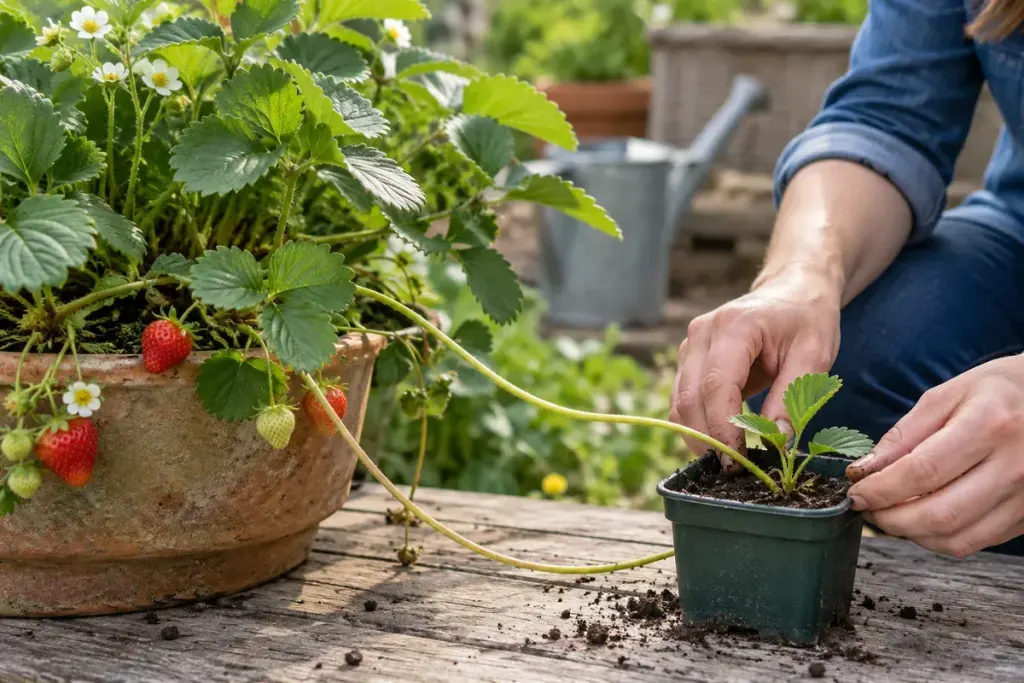
A long strawberry stem with a tiny leafy plant at its end is more than untidy growth. It can be a runner: a way for the parent to produce another plant. The useful moment is when that small plant can be encouraged to root before the connection is cut.
The Royal Horticultural Society’s strawberry guide describes rooting runners in pots beside the parent and separating them once rooted. Its seasonal advice reflects UK growing conditions; use local timing where climate differs.
Give the plantlet a stable contact point
Choose healthy parent material and place a small pot of suitable growing medium beside it. Position a plantlet so that its rooting area contacts the medium, and secure it gently with an appropriate peg. Keep the leafy centre above the surface rather than burying it.
Maintain slightly moist conditions without leaving the pot waterlogged. A runner moved repeatedly by wind, watering or foot traffic may lose contact just when roots are beginning to form. Place the pot where it can remain undisturbed.
Let roots decide the next step
Do not use a fixed number of days as proof of readiness. Look for evidence that the young plant has established roots in its pot before severing the connection. If uncertain, allow more time rather than repeatedly pulling the plant out to inspect it.
Label the new plant with its variety and propagation date. That modest note becomes valuable when several pots look alike, especially if you later compare fruiting habits or decide which plants to keep.
Runners are not equally abundant in every strawberry type. The RHS notes that perpetual-fruiting varieties generally produce fewer than summer-fruiting ones. If a plant produces no runner, do not assume it has failed. Match the propagation approach to the plant, and avoid multiplying material that already shows signs of disease.