
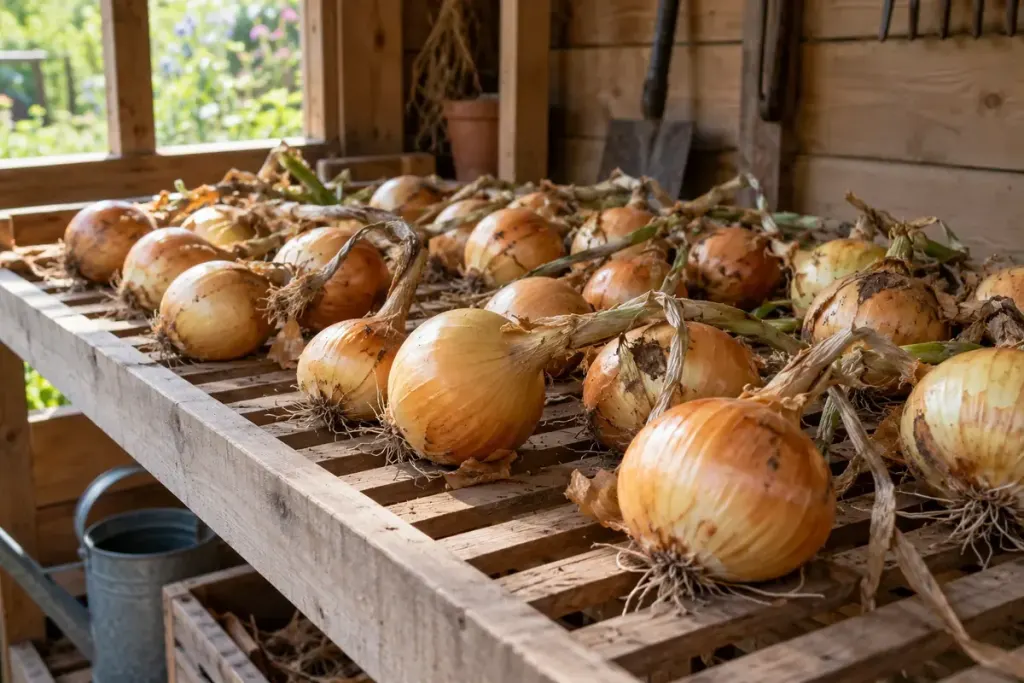
A basket of freshly lifted onions looks ready for the pantry, but storage begins before the basket is filled. Bulbs intended for keeping need a drying stage, often called curing, so the outer tissues and necks dry adequately.
Iowa State University Extension’s onion guidance describes curing until the tops and necks are thoroughly dry and the outer scales become papery. The condition of the bulbs matters more than treating a fixed number of days as a guarantee.
Sort while the harvest is still visible
Handle bulbs gently and separate those damaged during lifting. A cut or bruised bulb should not disappear into the middle of a long-storage batch. Follow suitable food-safety judgement for any rot or spoilage; curing is not a way to repair a diseased onion.
Arrange sound bulbs so air can circulate rather than heaping them into a deep, closed container. Choose a sheltered drying arrangement appropriate to your weather. A period of rain or persistent humidity changes what an exposed outdoor rack can achieve.
Check the neck, not only the outer colour
A bulb can look golden while the neck still feels thick or moist. Inspect a few representative onions across the rack, including those in less airy positions. If parts of the batch dry unevenly, adjust spacing and airflow instead of assuming all bulbs are ready together.
For a small household crop, keep a note of the variety and harvest date. Some varieties are grown for storage more successfully than others. A sweet onion used soon and a storage variety kept for later are different plans, even if both looked similar in the garden.
Once cured, use the recommended cool, dry, ventilated storage conditions for your crop and check it periodically. Remove bulbs showing deterioration so they are not overlooked until the next meal preparation.
The practical aim is a harvest you can inspect and manage. A single layer during curing, a separate group for early use and a labelled storage batch make that easier than one large basket. Good storage starts with recognising that lifting the onion and preparing it to keep are two separate jobs.