
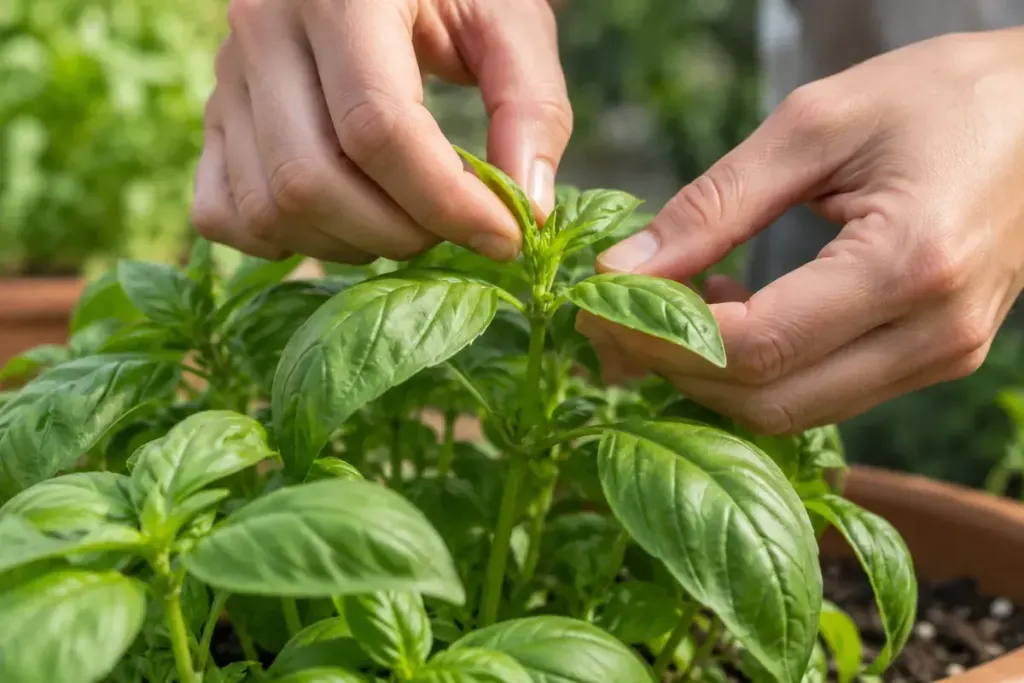
Taking individual basil leaves from the bottom of a tall stem can leave a plant looking increasingly bare. Looking for a suitable leaf pair before harvesting gives you a more deliberate place to shorten the stem.
Examine a healthy, established shoot. Find a pair of leaves with growth remaining below the point you intend to remove. The aim is to take the tip while leaving the plant able to continue growing, not to strip a small seedling to a stalk.
Make the harvest a small pruning decision
The RHS basil care notes describe pinching stem tips just above a pair of leaves to encourage branching. Use clean fingers or clean scissors for a neat removal rather than pulling hard enough to damage the remaining shoot.
Start modestly, especially if the plant has recently been moved or is growing weakly. Do not treat pruning as a cure for poor light, cold conditions or unsuitable watering. Those problems need attention in their own right.
Inspect the plant before harvesting for the kitchen. Use healthy leaves, wash them appropriately and keep garden tools separate from food preparation surfaces. If a treatment has been applied, follow its edible-crop and harvest instructions.
Watch the next growth
Take a photograph before the first small trim and compare the same stem later. Notice where side shoots develop and whether new leaves look healthy. This is more informative than repeatedly cutting every stem because a calendar says to harvest.
If flower stems appear and your aim is continued leaf production, consult the plant’s care guidance about removing them. The RHS basil growing guide discusses harvesting and flower removal alongside the wider growing conditions.
Keep enough foliage for the plant to recover between harvests. A small herb pot can supply useful leaves, but it is not an unlimited source. Planning a dish around what the plant can spare is better than removing most of its growth for a single meal.