
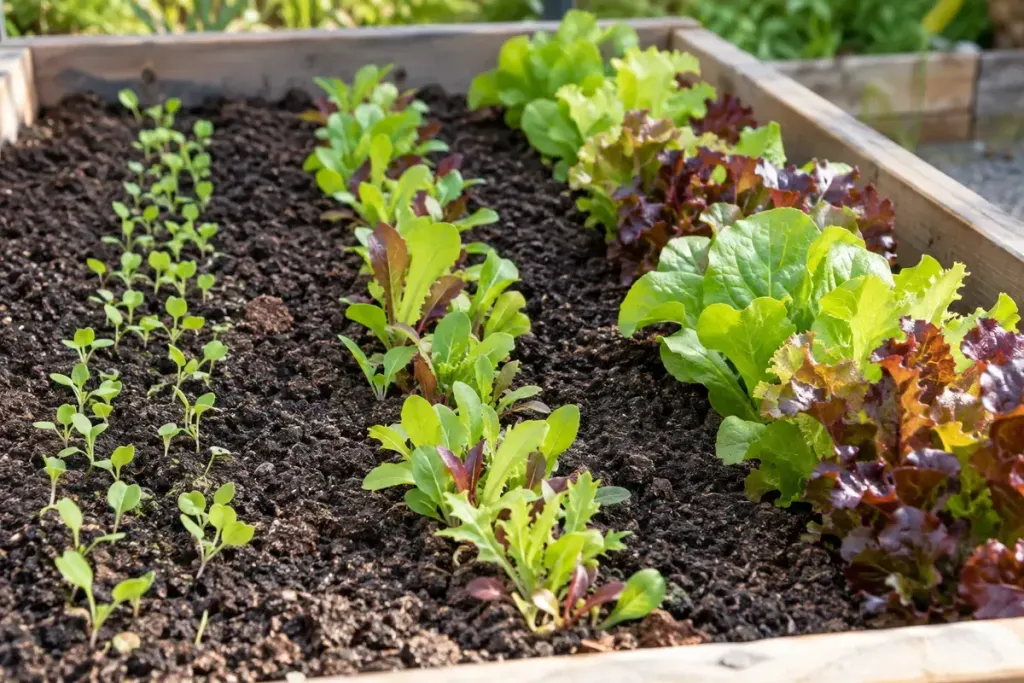
A whole packet of salad seed can produce a satisfying row of seedlings and, later, more leaves than the household can eat. A few weeks afterwards, the bed may offer very little. Successional sowing spreads the work and the harvest.
The RHS guide to succession recommends small repeated sowings for suitable quick-maturing crops. Its seasonal advice is written for UK conditions; use the seed packet and local growing guidance to choose appropriate dates in your climate.
Plan backwards from the bowl
Start with a short row or a modest container. Record the variety, sowing date and area used. When harvesting begins, note whether it supplies too much, too little or about the right amount for your meals.
Use that observation to size the next batch. A household eating salad once a week needs a different planting rhythm from one harvesting daily. Buying a mixed packet does not remove the need to consider how quickly its different leaves grow.
Let conditions adjust the interval
A fixed calendar reminder is helpful, but inspect the previous sowing before repeating it. Cold can slow growth; heat and day length can affect bolting and quality. Two batches sown weeks apart may mature closer together than expected if conditions change.
Keep labels with each batch so you can distinguish a slow variety from a later sowing. Avoid filling all available space at once; leave somewhere for the next small row.
Cut-and-come-again harvesting and succession are related choices, not identical ones. A crop may regrow after cutting, but its productivity and quality still change over time. Keep replacement plants in mind rather than expecting one sowing to last indefinitely.
At the end of a few cycles, review the simple record: amount sown, first harvest and usable yield. The useful target is a manageable flow of fresh leaves, not the largest possible patch of seedlings on planting day.