
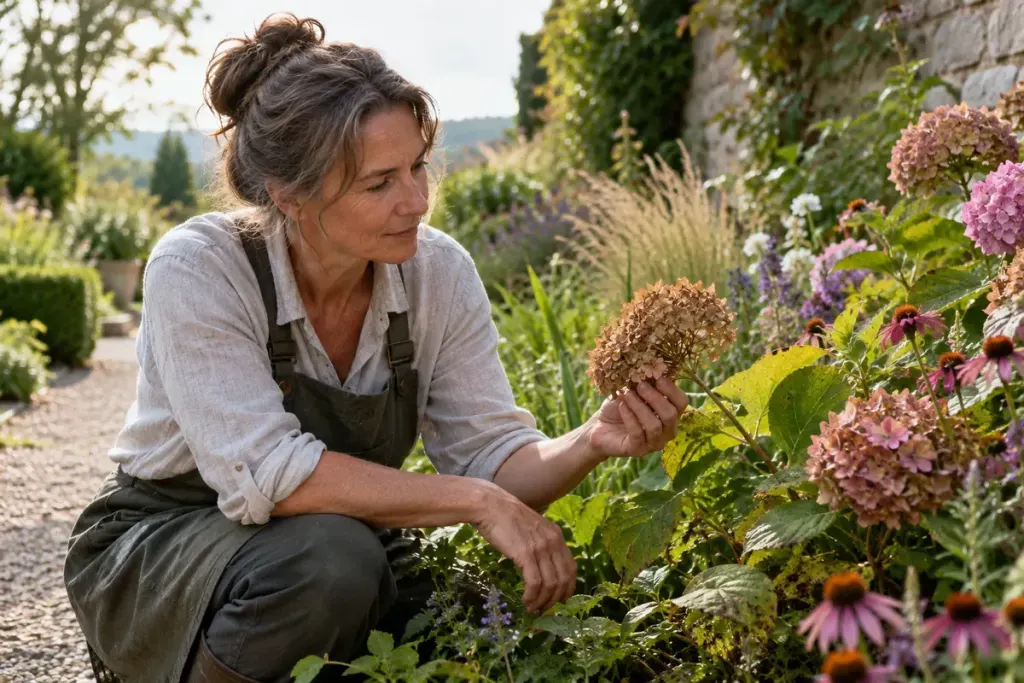
A faded flower can be the end of a display or the beginning of a seed crop. Before removing it, decide what you want the plant to do next. Deadheading is useful, but it is not a compulsory tidying step for every plant.
The Royal Horticultural Society’s deadheading guide explains how removing spent flowers can improve appearance and encourage further bloom in suitable plants. It also identifies reasons to leave seed heads, including seed collection, decorative interest and food for birds.
Look for the next growth point
Identify the plant and follow guidance for its flowering habit. A single faded bloom, a cluster of flowers and a whole spent flower spike may need different treatment. Do not cut through an unopened bud simply because it sits near a tired flower.
Use clean, suitable tools and make a controlled cut where the plant’s guidance indicates. Soft spent flowers may be pinched off; tougher stems may need secateurs. Avoid pulling hard enough to damage the stem or uproot a young plant.
Choose a purpose for each area
In a display container, you might prioritise continued flowers and remove fading blooms regularly. In a seed-saving patch, you may leave selected healthy heads to mature and label them. A wildlife border can have a different plan again.
Record what you leave and why, especially in a shared garden where another volunteer might otherwise remove it. A simple marker saying “leave for seed” prevents a well-intentioned tidy-up from undoing the plan.
Do not expect deadheading to make every plant flower indefinitely. Season, species, water availability and overall condition still matter. If flowering stops, inspect those factors rather than cutting progressively more growth away. The most useful habit is to pause at the faded bloom and ask whether removing it serves the next stage you actually want.