
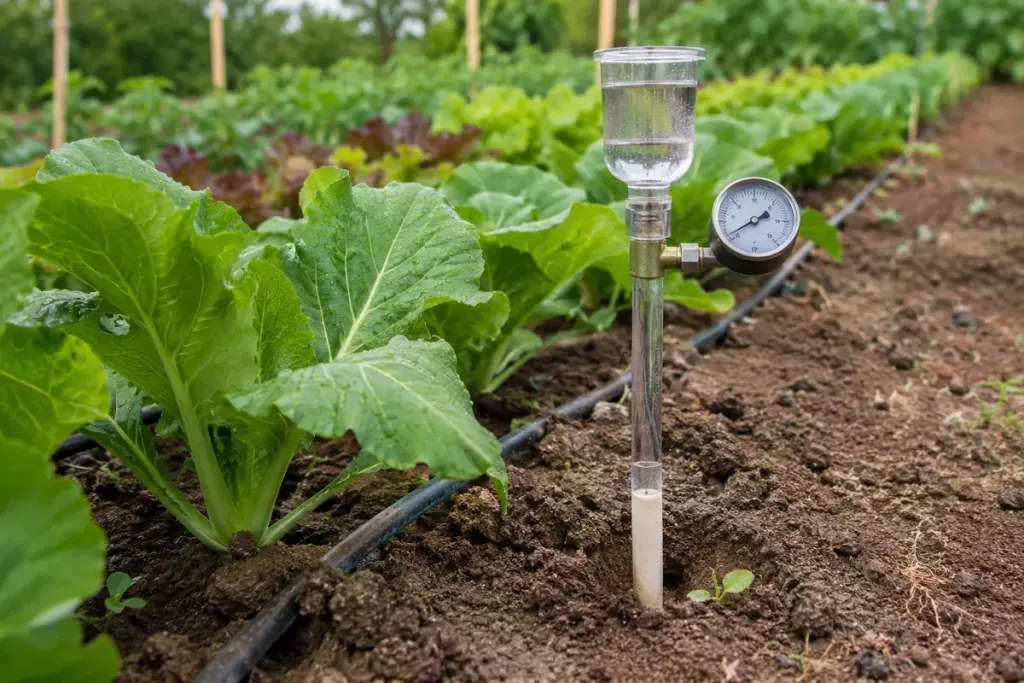
Two beds can look equally dark after watering while their roots face different conditions. A tensiometer helps look beyond the surface by measuring soil water tension: how strongly water is being held in the soil. It does not simply display a percentage of water in the bed.
Higher tension means a harder pull
A conventional tensiometer uses a water-filled tube with a porous ceramic tip and a gauge. Good contact between the tip and surrounding soil lets the instrument respond to the local water conditions. As the soil dries within the instrument’s operating range, the tension reading generally rises.
The University of Minnesota’s irrigation sensor guide explains why sensor type, soil, and placement matter. The same number cannot be treated as the correct irrigation trigger for every crop and soil. A reading near the wet end also does not prove that roots have a healthy balance of water and air.
Give the reading a location
Before making a watering decision, write down which bed the instrument represents, its depth, and the last irrigation or rainfall. A sensor close to a dripper may tell a different story from one between emitters. An air gap around the ceramic tip can undermine the measurement; installation deserves as much care as reading the dial.
Penn State’s soil moisture guidance discusses sensor installation and monitoring. Follow the instrument manufacturer’s filling, maintenance, and operating-range instructions rather than treating a stalled gauge as evidence that conditions have stopped changing.
Use a short observation log
Record readings at a consistent time along with weather, irrigation duration, and a brief plant observation. Look for the response after watering and the trend between events. If one reading disagrees sharply with neighbouring observations, inspect the instrument and its position before increasing water.
This turns a gauge into a learning tool. With crop-specific advice and a representative location, it can help explain when the root zone is becoming drier without pretending to replace knowledge of the field.