
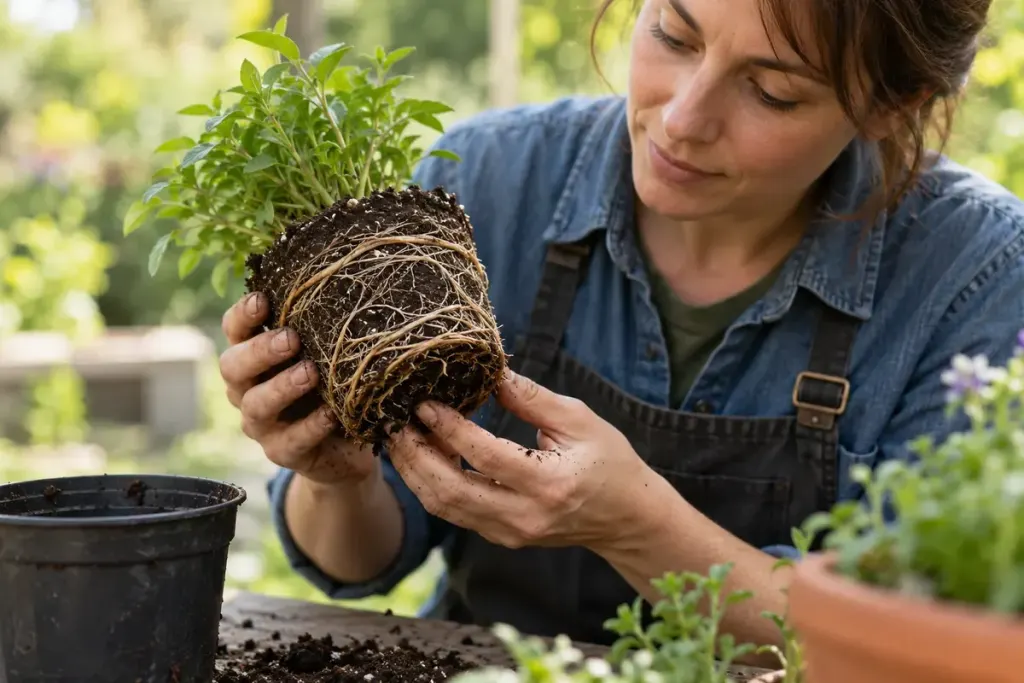
A plant dries out quickly, grows little and has roots visible at the drainage holes. Those signs invite a closer look, but they do not all prove the same thing. Check the root ball and the plant’s care requirements before moving it into the largest pot you own.
Look at the roots without pulling the stems
Follow a suitable repotting method for the plant and container. Support the root ball and ease the plant out gently when conditions are appropriate. Do not yank it by the foliage or force a valuable plant out of a difficult container without advice.
The RHS guide to repotting describes assessing congested roots and choosing a suitable next container. Roots spiralling around the sides can indicate that the available space is crowded, but the right treatment depends on the plant and its condition.
Choose the next growing space
Consider drainage, compost type and a manageable increase in size. A very large container is not automatically a generous improvement; it changes how much growing medium surrounds the roots and how that medium holds moisture. Use species-specific guidance for the pot size and any root work.
Check the drainage holes and the way the pot will sit in a tray or decorative outer container. A good inner pot can still stand in retained water if the outer container is not checked.
After repotting, follow the plant’s watering and positioning guidance. Do not respond to every drooping leaf with more water without checking the medium. Disturbance, light changes and moisture problems can look similar at first.
Record the date, old and new pot sizes and the compost used. Take a simple reference photograph so later growth can be compared with something more reliable than memory. Repotting is a change in growing conditions; the useful question is how the plant responds over time, not how impressive the new container looks on the first day.