
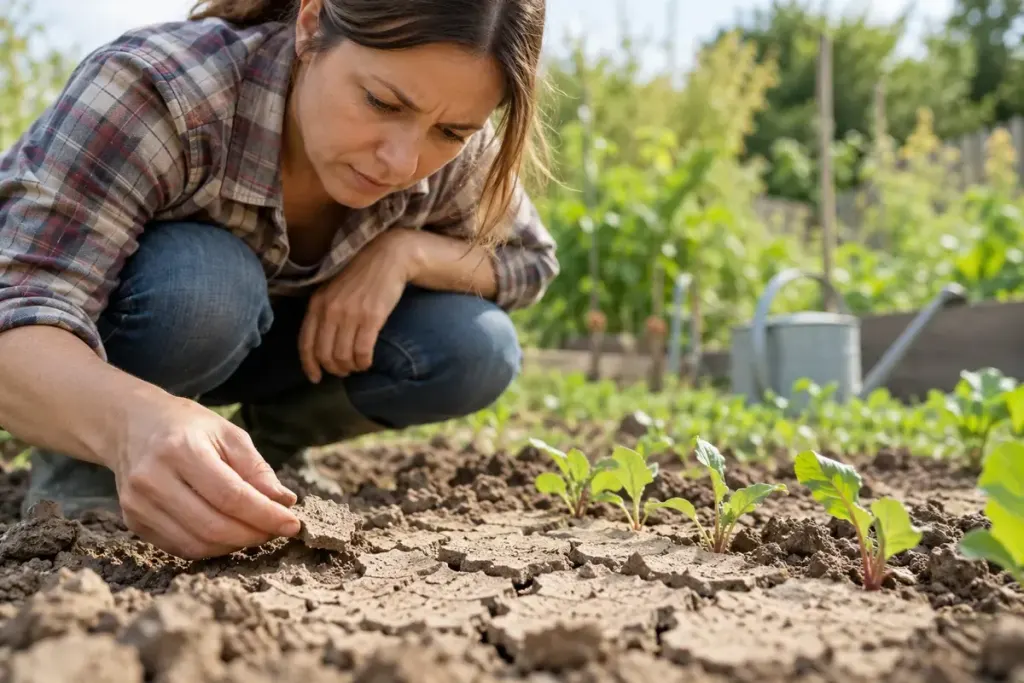
A seed row looks empty and the surface has dried into a hard skin. It is tempting to sow again or scrape the whole bed. First check whether seedlings are already trying to emerge beneath that crust.
University of Minnesota Extension’s guidance on crusting explains that the response depends on the crust’s depth and the stage of emergence. Cultivation that is tolerable before seedlings approach the surface may damage them when they are just breaking through.
Look beneath the surface at a small edge
Check a limited area carefully rather than disturbing the whole row. Note the sowing date, seed depth and recent rain or irrigation. Compare the actual stage with the crop’s expected emergence under your soil temperature, not only the number of days printed as a broad guide.
A dry-looking surface does not prove that the root zone needs more water. Utah State University’s clay-soil guidance notes that a crust may look dry while soil immediately below remains saturated. Check moisture before adding water.
Choose the least damaging response
Where appropriate, gentle irrigation can soften a crust, but the amount and timing must suit the crop, drainage and current moisture. Do not keep an already wet bed saturated. If seedlings are near the surface, aggressive raking can break the growth you are trying to help.
For a valuable crop or a widespread field problem, seek local extension advice. Soil type, equipment and crop stage matter; a recommendation for a large grain field is not automatically a method for a small vegetable tray.
Record where crusting occurred and how the bed was prepared and watered. For future sowings, review soil structure, surface disturbance and watering intensity. The immediate question is whether seedlings can emerge; the longer-term question is why the surface repeatedly seals. Keeping those questions separate helps you avoid replacing a difficult seedbed with the same conditions again.