
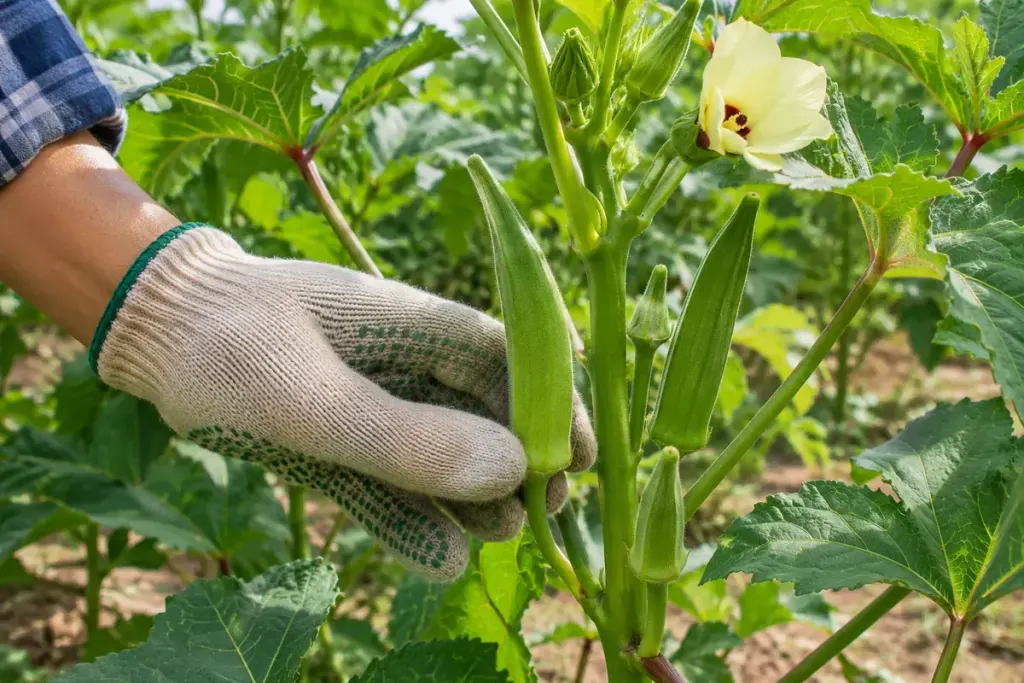
Okra pods can look promising on the plant and turn out tougher than expected in the kitchen. The harvest decision is about tenderness as well as appearance, so regular checks are more useful than waiting for every pod to reach an impressive size.
The Royal Horticultural Society’s okra guide recommends picking young, tender pods and notes that the plant’s hairs can irritate skin. Gloves can help when handling the crop. Its growing advice is written for UK conditions; local seasons and growth rates elsewhere need their own context.
Make the check part of your routine
During active production, look along the plant rather than only at the most visible pods. A small pod hidden behind a leaf can be overlooked while a larger one attracts attention. Use the seed supplier’s variety information as a reference, but judge the crop in front of you.
Keep a brief harvest note if you are learning a new variety: date, approximate pod size and how the pods cooked. Comparing two pickings can reveal when your preferred eating quality starts to change. Avoid turning one result into a rule for every cultivar or weather condition.
Pick without pulling the plant about
Use a suitable clean cutting tool and handle the plant carefully. Tugging at a resistant pod can damage the stem or disturb neighbouring growth. Keep your hands protected if the hairs irritate you, and avoid rubbing your face while working.
Put the harvest in a container that will not crush it under heavier vegetables. Once indoors, separate pods that seem unusually tough rather than assuming longer cooking will make every one pleasant to eat. Your recipe and texture preference will also influence the final choice.
The useful habit is a short loop: inspect, pick, cook and observe. That connects the plant’s development with the food on your plate and gives the next harvest a better starting point than size alone.