
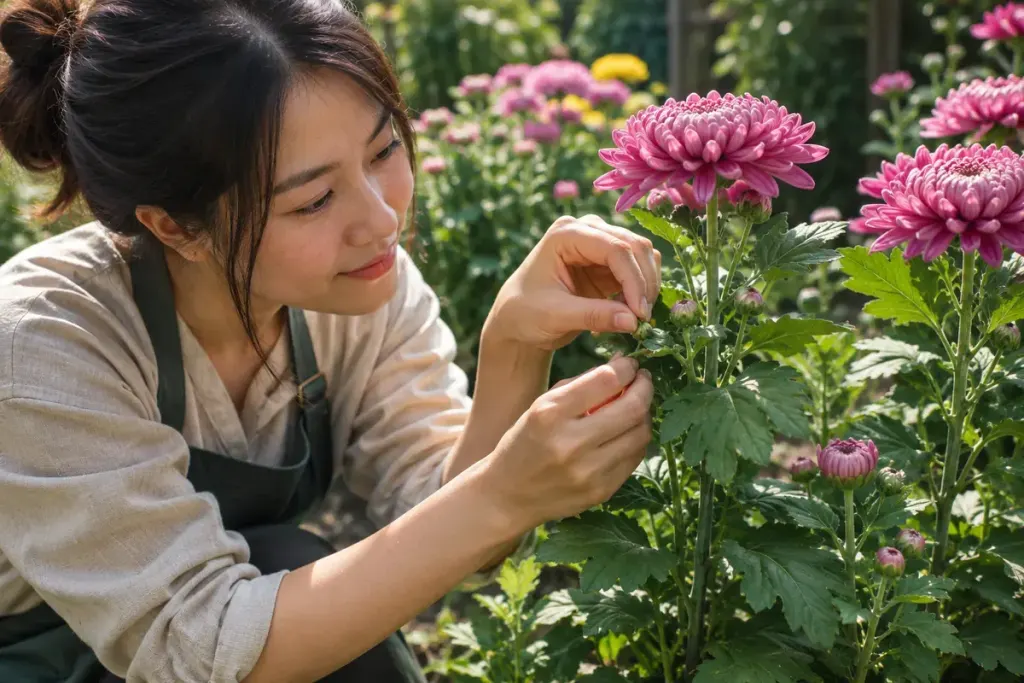
Two gardeners remove small pieces from similar plants, yet one wants more branching and the other wants a larger individual bloom. The actions can look alike from a distance. Pinching and disbudding are different decisions about where growth should be encouraged or reduced.
The RHS chrysanthemum guide distinguishes pinching out young growth from removing selected flower buds. Chrysanthemums provide a useful example because the desired display can range from several flowers to a carefully managed exhibition bloom.
Name the result before removing anything
Pinching usually concerns a growing tip and the branching pattern that follows. Disbudding concerns selected buds, often to concentrate the display in the buds retained. Neither instruction means “remove every small thing near the top.” The plant type, cultivar and stage of growth matter.
Before working on a plant, identify the growing tip and flower buds with a reliable species-specific guide or an experienced grower. A blurry photograph of another variety is a weak basis for an irreversible cut.
Keep a simple plant record
For an illustrative garden trial, choose two comparable plants only if the growing guidance supports the intended treatment. Record their variety, stage and the operation performed. Photograph the starting structure. Observe branching, flowering time and the number and size of blooms without assuming that weather or plant vigour remained identical.
Follow the relevant guidance on timing and tool hygiene. If you are growing mainly for a relaxed garden display, intensive disbudding may not serve your purpose at all. A technique used for exhibition is not automatically an improvement for every border or container.
When asking for help, describe the result you want: “more flowering stems,” “one larger bloom,” or “a compact shape.” That lets the adviser explain the appropriate operation instead of guessing what you mean by “pinch it back.” Clear vocabulary protects the buds you actually hoped to keep.