
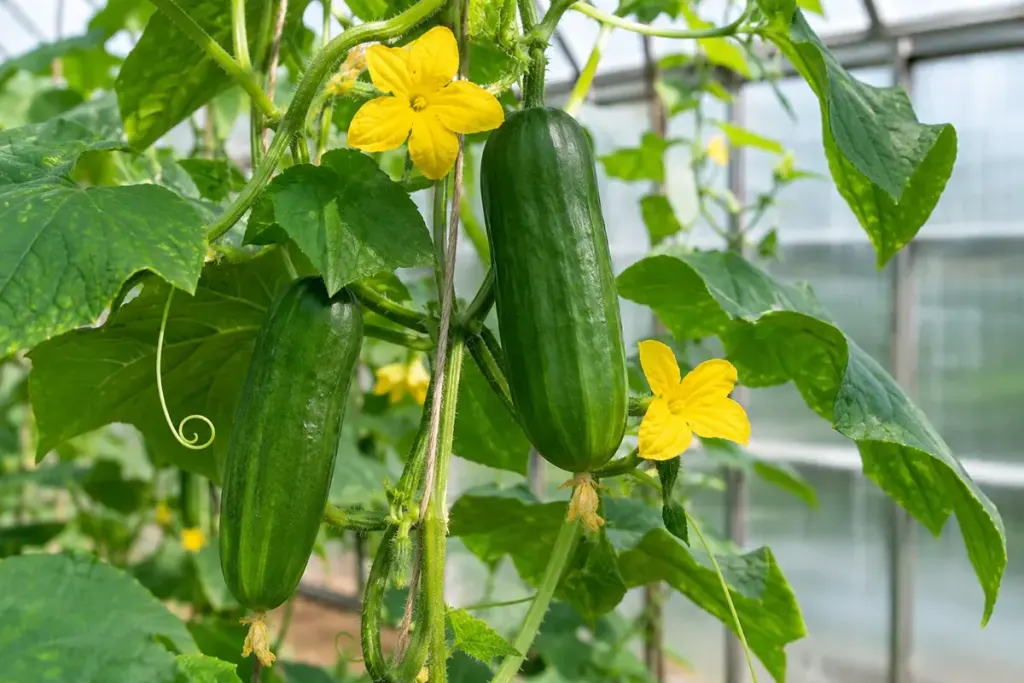
A cucumber plant grows behind insect mesh and still sets fruit. For a parthenocarpic variety, that can be expected. The term describes fruit development without pollination; it changes one important part of the growing plan.
University of Maryland Extension explains that parthenocarpic varieties can produce fruit without being pollinated. If pollen from conventional cucumber varieties reaches them, developed seeds can occur. The exact variety and production aim therefore matter.
Do not use flower type as a substitute for the label
Gynoecious describes plants producing predominantly female flowers. It does not, by itself, mean that the variety can set fruit without pollination. Read the seed supplier’s full description and growing instructions rather than treating these two technical terms as synonyms.
Make a short crop record with the variety name, seed lot, pollination requirement and intended growing environment. Keep the original packet or a saved specification so the information is available after planting.
Plan protection around the actual crop
A suitable parthenocarpic variety can be useful where pollinator access is limited. However, leaving plants covered still requires attention to temperature, airflow, irrigation and the particular cover system. “No pollination needed” does not mean “no management needed”.
For a small trial, grow a clearly labelled group and record flowering, fruit set and growing conditions. If fruit development disappoints, check the variety identity and plant conditions before assuming that a lack of bees is the explanation.
Do not compare an uncovered conventional plant with a covered parthenocarpic plant and attribute every difference to genetics. The environments differ too. A useful trial note states what changed and what remained similar.
Before expanding production, ask the seed supplier or local extension service how nearby cucumber varieties and your growing system may affect the intended fruit quality. Understanding the word on the packet helps you ask that question precisely—and avoids applying a pollination rule from one cucumber type to all the others.