
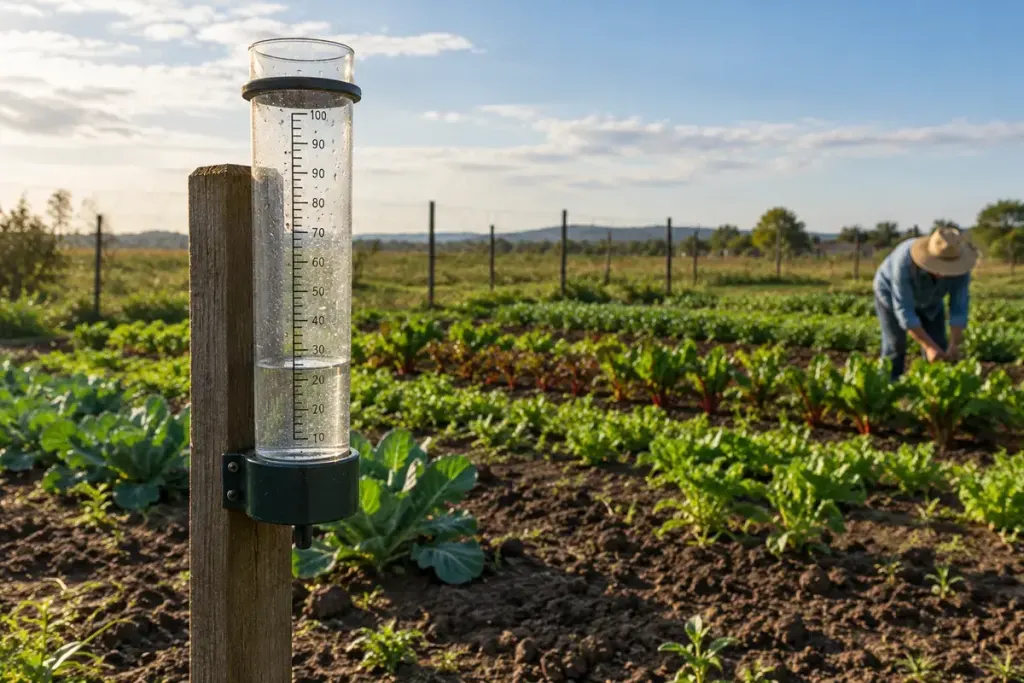
A rain gauge beneath a tree may be easy to reach, but it is also measuring the influence of the tree. Leaves can intercept rainfall, while drips from branches can concentrate water into the collector. A convenient position is not always a representative one.
Choose the site using the gauge manufacturer’s guidance and any local agricultural or weather-observation standard you intend to follow. The opening should be level, the instrument secure, and the surroundings suitable for the type of gauge.
Look around the collector
The Met Office explanation of rainfall measurement describes how gauges collect and measure precipitation. For a practical field record, the siting matters alongside the instrument: nearby roofs, overhanging vegetation, obstructions and splash can affect what enters it.
Walk around the proposed position. Consider how crops or hedges will grow during the season and whether machinery, animals or irrigation could disturb the gauge. A site that is open at planting time may be shaded by tall vegetation later.
Keep the reading routine consistent
Use the scale and reading method supplied for the instrument. Record the date, reading time and period covered, then empty or reset it as instructed. If a reading is missed, label the longer accumulation period instead of assigning all the water to the most recent day.
Check for blockage and damage without changing the setup casually. If you move the gauge, note the date and the new location. A change in exposure can make the old and new records less directly comparable.
Use the number for the right question
A gauge tells you about precipitation collected at its location. It does not directly measure soil moisture, runoff or the water available to roots. Combine the rainfall record with field observations and appropriate irrigation advice rather than treating every measured millimetre as water retained by the crop.
A modest instrument can support useful decisions when its site and routine are documented. The value comes from a consistent local record, not from treating one reading as a complete account of the field.