
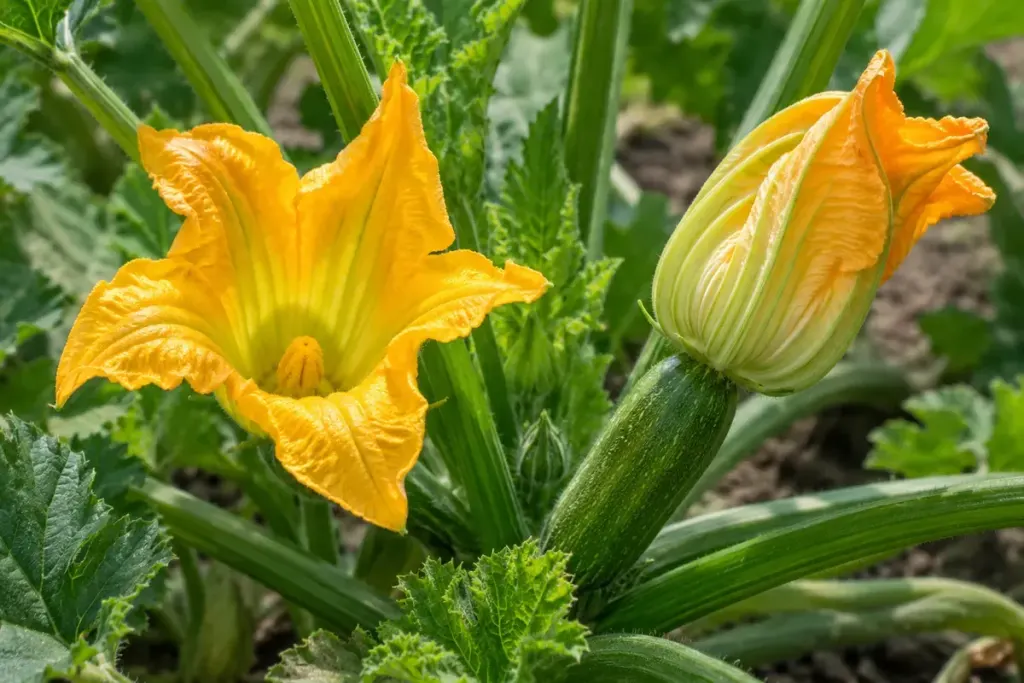
The courgette plant has produced several bright yellow flowers, but only some have a small swelling behind them. Before counting every bloom as a future harvest, look at the flower’s base.
Find the small fruit behind the flower
The RHS guide to courgette and squash problems explains that female flowers have an immature fruit at their base, while male flowers do not. Young plants may produce male flowers first. A succession of flowers without immediate fruit is therefore not enough on its own to diagnose a failing plant.
Pollination and growing conditions also matter. Poor insect activity or unsuitable conditions can affect fruit development, and the presence of a tiny fruit is not a guarantee that it will mature.
Make a short observation record
For several mornings, note which flowers are open, whether you can see the swelling at the base, recent weather and any insect visits observed without disturbing them. Use the same plant identifier each time. A dated photograph can help compare a particular fruit’s development.
Keep observations separate from guesses. “Two open flowers without swollen bases” is clearer than “No female flowers anywhere,” especially if dense leaves hide part of the plant.
Choose the next step from the evidence
Review watering, light and plant condition using guidance suitable for your climate and growing setup. Do not respond to every dropped flower with more fertiliser or an insecticide. A wrong intervention can add another problem without addressing the first.
If you are considering hand pollination, follow a reliable horticultural method after correctly identifying the flowers. Avoid damaging them or removing all the male flowers for cooking before understanding their role in the crop.
At the next review, compare the same plant over time rather than judging it from one disappointing afternoon. Record what you changed and when. The useful question is not simply how many flowers appeared, but which flowers were present, what conditions they experienced and what happened to the developing fruit afterwards.