
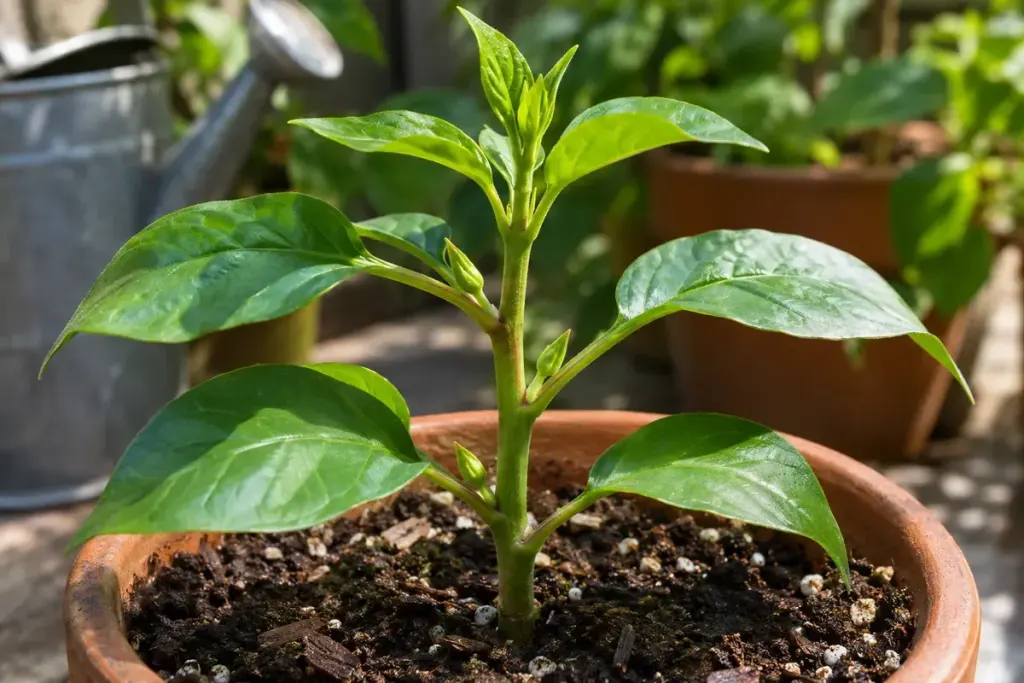
Two cuts of similar size can produce very different-looking plants. Shortening the end of a shoot may encourage growth nearby, while removing an entire branch at its origin changes the plant in another way. Part of the explanation is apical dominance.
The growing tip influences the development of buds farther down the shoot. Auxin is involved in that regulation, and the strength of the effect differs among plants. University of Georgia Extension’s pruning explanation connects removal of the terminal bud with renewed growth near a heading cut. It also distinguishes heading from thinning a branch out at its origin.
Look for the buds before choosing the cut
On a suitable young plant, identify the shoot tip, the points where leaves attach, and any visible buds in those leaf axils. You are looking at possible growth points, not blank stem that will necessarily sprout wherever scissors happen to land.
This is a way to understand a response, not a universal instruction to remove tips. Crop, cultivar, age, season and the intended harvest all matter. Consult guidance for the actual crop before deciding whether branching is desirable or whether the cut would remove future flowers or fruiting growth.
A small observation record
If the crop guidance calls for a particular pruning operation, add a simple record to your usual growing notes:
- Photograph the shoot before the cut and mark the intended growth point.
- Record the plant, date and reason for the operation.
- Photograph the same area later, noting which buds actually developed.
- Record other changes, including watering, weather or pest damage.
That final step prevents an attractive before-and-after photograph from becoming an overconfident explanation. A plant may branch differently for several reasons at once.
Use the record to ask a better question next season: did the chosen cut produce useful growth in the place you wanted? Understanding apical dominance helps you predict possibilities. Observing the particular plant tells you whether that prediction was useful.