
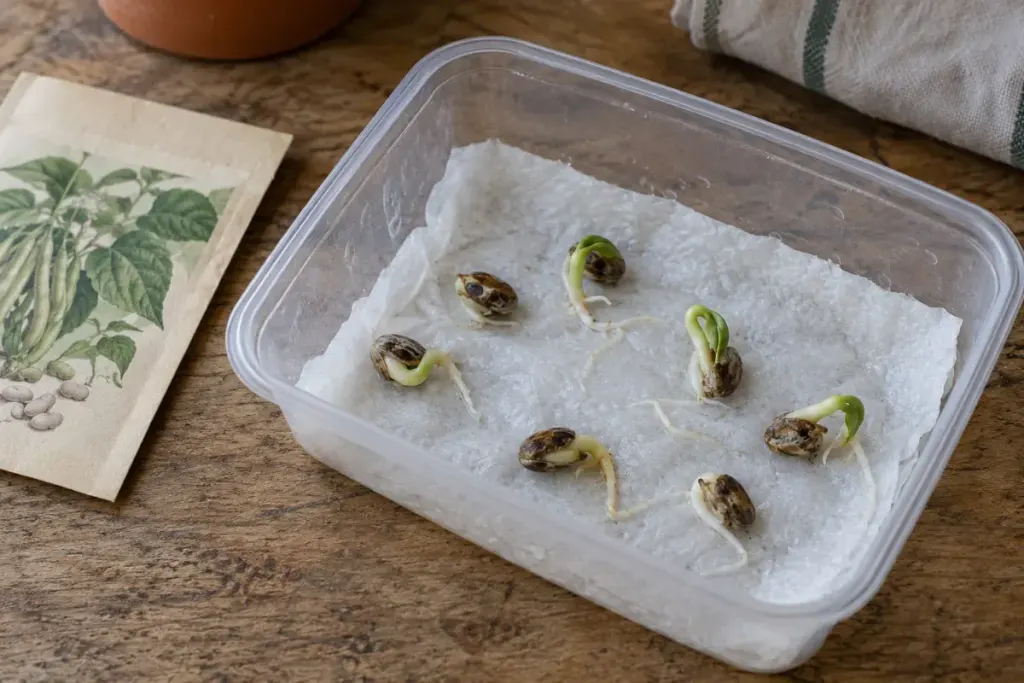
The seed packet is old, but it still contains plenty of seed. Sowing the entire bed is one way to find out whether it works; a small germination check can give you information while there is still time to change the plan.
Begin with the species and its germination requirements. Some seeds need particular temperatures, light conditions or pretreatment. A test performed under unsuitable conditions can make viable seed look useless.
Keep the test small and traceable
The University of Missouri Extension’s Seedy Business activity guide includes a germination test using moist paper and a counted seed sample. Use crop-specific guidance for conditions and timing, and keep the paper moist rather than submerged.
Take seeds from the packet without selecting only the largest or most attractive ones. Label the sample with the variety, packet or lot, start date and number tested. Keep different samples separate so a promising result does not become detached from the packet it belongs to.
Check and record progress over the appropriate period. Do not declare a slow-germinating species a failure after the first few days simply because another crop has already sprouted.
Read the result with its limits
In an invented example, seven germinated seeds out of ten tested gives a sample result of 70 percent. It does not guarantee that exactly seven of the next ten will grow, and germination under protected conditions does not guarantee establishment outdoors.
A small sample is especially uncertain. Record both the count and the conditions rather than writing only “good seed”. If the result is unexpected, review moisture, temperature, pretreatment and the test method before drawing a firm conclusion.
For valuable seed or a commercial planting decision, seek appropriate seed-testing or agronomic advice. A kitchen-table exercise is not a replacement for a formal quality assessment.
Use the information before sowing day
The result may help you decide to obtain fresh seed, run a better test or adjust the planting plan. Keep a note of the eventual emergence in the bed as well. Over time, comparing test conditions with real growing results is more useful than treating a packet date as the only fact that matters.