
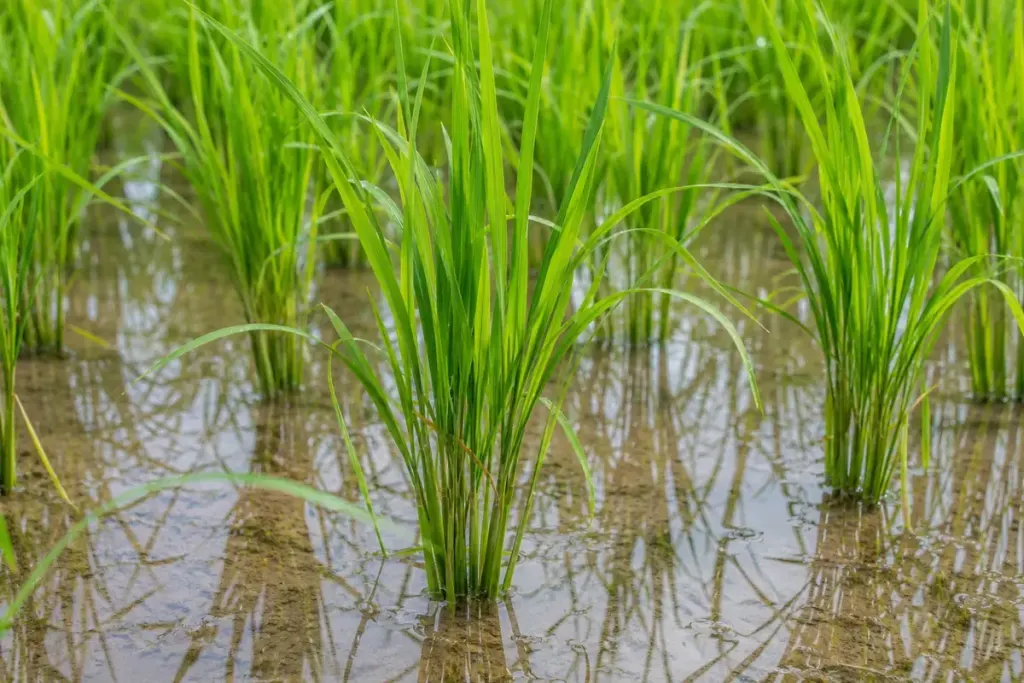
A rice clump with several green stems may look like several seedlings planted together. Sometimes it is. But a single rice plant can also produce additional shoots called tillers. Knowing which you are observing makes field notes much more useful.
The International Rice Research Institute’s rice morphology reference describes tillers as shoots developing from buds associated with the lower nodes of the plant. They are connected parts of that plant, rather than new seedlings grown from additional grains.
Count hills, plants and tillers separately
These terms answer different questions. A hill describes a planting position or clump. It may contain more than one seedling. Tillers describe the shoots produced by those plants. Writing only “ten stems” leaves the reader uncertain about what was actually counted.
For a simple observation exercise, mark several representative planting positions and keep their identities consistent. Record the date, crop stage and the counting method. If the original number of transplanted seedlings is known, keep that information beside the later shoot count. Avoid pulling plants apart merely to improve a casual count.
More shoots do not settle the yield question
Some tillers develop panicles and contribute to harvest; others do not. A shoot count taken early in growth therefore cannot be read as the final number of grain-bearing stems. Conditions, variety and management affect how the crop develops.
Consider two hypothetical field notes. “Plot A has many stems” is difficult to compare with next week’s visit. “Five marked hills were observed using the same method; panicle emergence has not yet begun” provides a clearer starting point, even before any numbers are added.
Use these observations to frame questions for local crop advice: Is development appropriate for this variety and season? Are changes uniform across the field? A tiller count can support that discussion, but it does not by itself justify an extra fertiliser application. Decisions about nutrients need the wider field context and locally appropriate recommendations.