
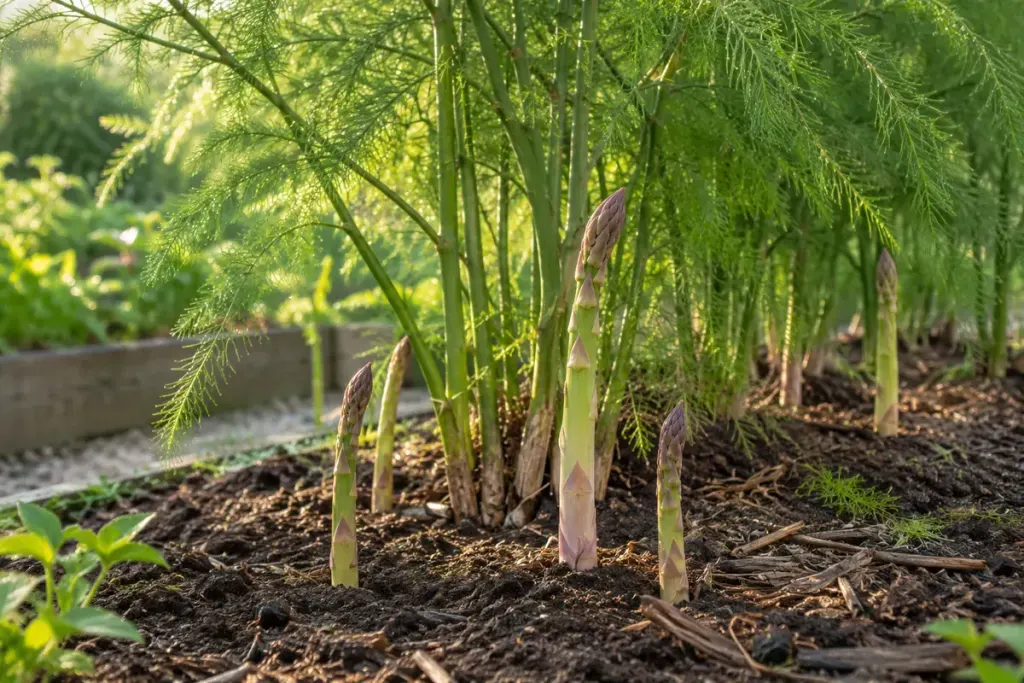
The first asparagus spears are tempting precisely because the bed has taken effort to establish. Cutting everything that appears can work against the reason for planting it: a productive perennial crop over several seasons.
The RHS asparagus guide, written for UK growing conditions, advises leaving newly planted asparagus unharvested for the first two years, or three when raised from seed. It then describes a limited first harvest season before longer harvests in later years. Local climate, planting material and plant condition need to be considered when applying guidance elsewhere.
Give the bed an age record
Label the planting year and whether the plants began as crowns or seed. If several sections were planted at different times, mark them separately. A mature-looking spear in the newest section should not make that section inherit the harvest plan of an older bed.
Keep a simple seasonal record: first emergence, weather damage, general vigour, harvest start and harvest stop. Record weak or missing plants so you can discuss the pattern with a local adviser. Avoid using one unusually thick spear as evidence that every plant is equally established.
Plan the end before the first cutting
A harvest window needs a stopping point that leaves the plants able to develop their later growth. Put that date or decision criterion in the garden notes before enthusiasm takes over. The appropriate plan comes from reliable guidance for the crop and your growing conditions, not from how much asparagus the kitchen would like this week.
For an illustrative shared garden, one sign could identify the older harvesting section and another could explain that the newer section is being left to establish. That avoids relying on every volunteer remembering a conversation from the planting day.
Inspect the bed through the rest of the season too. Water management, weeds, pests and damaged foliage do not stop mattering when harvesting ends. Use local advice for problems rather than adding treatments on the basis of a photograph alone.
A good asparagus record measures progress in seasons. The reward for restraint is not a guaranteed yield figure; it is a bed managed with enough continuity to judge how it is developing.