
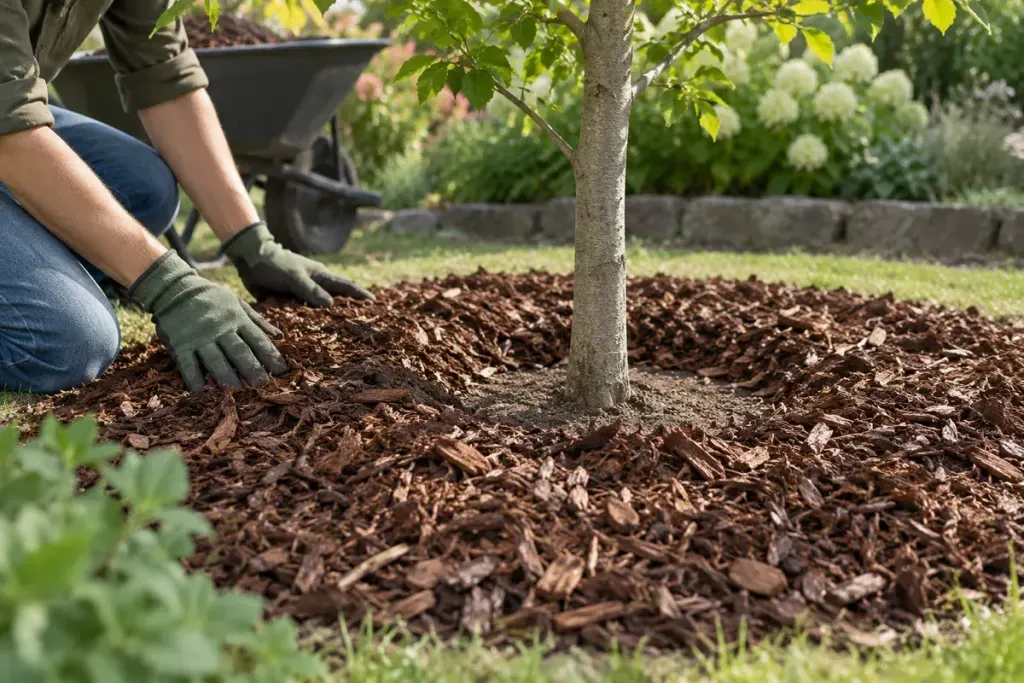
A fresh ring of mulch makes a planting bed look finished. Piled high against the trunk, however, that tidy appearance can conceal a poor arrangement. The plant’s base should not disappear inside a cone of material.
Mulch is a management tool. Its type, depth and placement should fit the plant and site, rather than follow the shape that looks most substantial from the path.
Find the existing surface first
Before adding another layer, check what remains from previous applications. Repeating the same top-up every season can create excessive depth even when each individual delivery seems modest. Distinguish loose mulch from soil and avoid damaging roots while inspecting.
The University of Maryland Extension’s mulching guidance says mulch should not touch a tree’s trunk. Its related discussion explains the problems associated with excessive mulch. Follow locally appropriate advice for your climate, soil and crop rather than applying one landscape rule to every growing system.
Think in a wide ring, not a tall mound
For suitable trees and shrubs, the useful area is over the surrounding soil while the trunk base remains clear. Ask a local extension service or qualified arborist about appropriate material and depth for the particular planting.
If you discover that the root flare is buried or suspect a planting-depth problem, do not simply excavate aggressively. Get competent advice. Removing a little loose material and correcting a deeply buried tree are different tasks.
Check what changes after application
Observe soil moisture, irrigation delivery and the condition of the plant. Mulch does not eliminate the need to assess watering. A surface that looks dry can sit above moist soil, while poorly positioned irrigation may wet the mulch without serving the intended root area.
Keep a brief record of the material, approximate application depth and date. Photograph the trunk base from the same position during later checks. This makes gradual accumulation easier to notice than relying on memory.
Use maintenance to preserve the arrangement
After heavy rain, gardening or mowing, check whether material has shifted against the stem. Avoid creating a new problem while trying to make the bed look neat. Keep machinery and trimming tools from striking the bark.
A good mulch job may look less dramatic than a tall cone around every tree. Its success is in the growing conditions it supports, with the plant’s base visible and the material doing its work on the soil around it.