
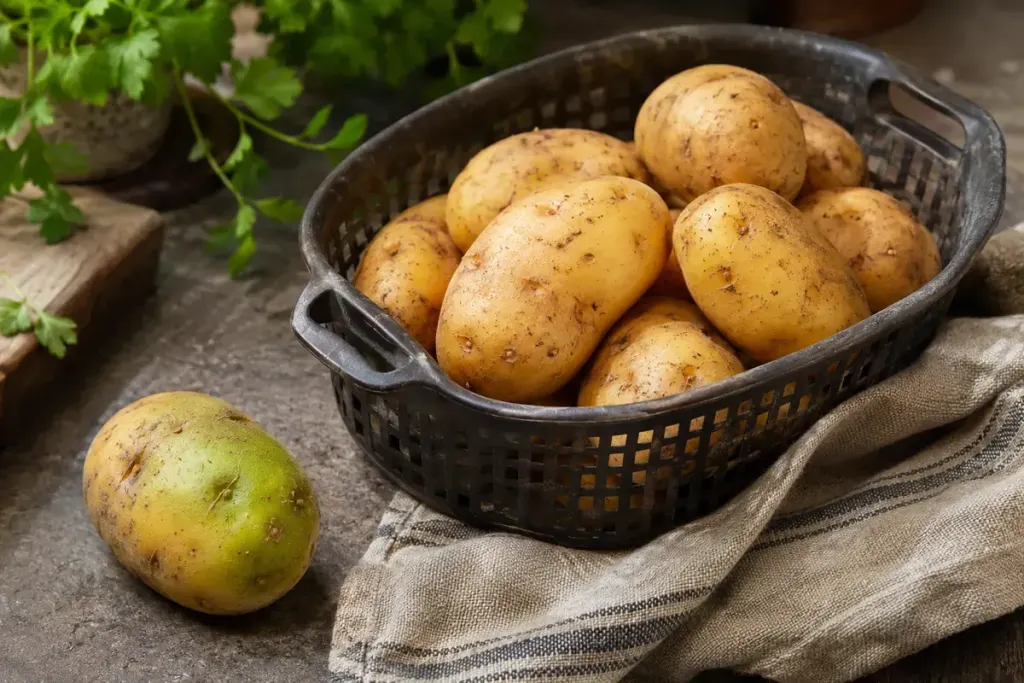
You lift a sack of potatoes from a bright corner and find green patches beneath the dust. Washing them will not explain the colour, and cooking them is not a reliable way to make a questionable tuber suitable to eat.
Greening involves chlorophyll, but exposure to light can also be associated with increased glycoalkaloids. The USDA’s guidance on green potatoes explains why the colour is a warning sign rather than simply a cosmetic change.
Separate the food decision from the storage investigation
Do not taste a suspicious potato to decide whether it is acceptable. For a straightforward household approach, set green or badly sprouted potatoes aside for disposal rather than trying to calculate a safe serving. Michigan State University’s food-safety explanation also recommends discarding green potatoes.
The next useful question is how the batch was handled. Was it exposed on a sunny doorstep after harvest? Did a thin bag sit beside a window? Were tubers left uncovered in a display or storage area? Looking at the route from soil to kitchen can reveal an avoidable exposure.
A practical batch record
Write down the harvest or purchase date, the container used and where it stood. Check several potatoes from different parts of the container rather than assuming the visible top layer represents everything beneath it. Keep sound potatoes in appropriate cool, dark, ventilated storage and inspect them periodically.
For a small grower, compare affected and unaffected containers before changing several practices at once. If only the batch beside an open door shows greening, light exposure deserves investigation. That observation is useful, but it does not establish toxin levels or make unaffected-looking potatoes a laboratory-tested product.
A shared kitchen can prevent confusion with a clearly marked discard container and a brief note explaining the concern. Avoid leaving rejected tubers beside ingredients ready for preparation. The aim is both an immediate, cautious food decision and a better storage arrangement for the next harvest.