
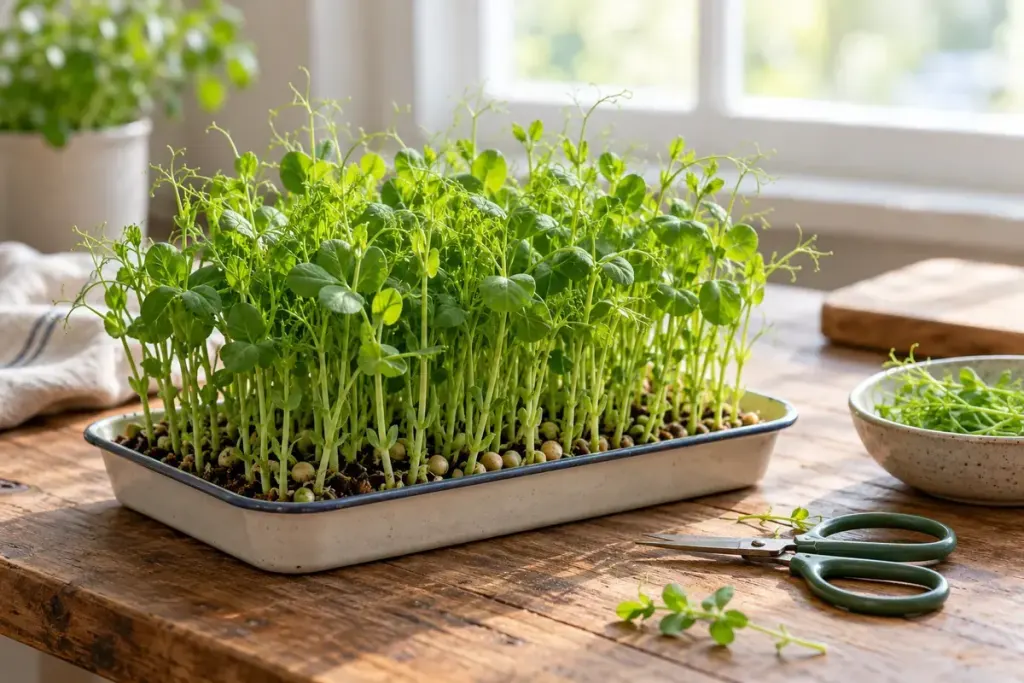
A tray of pea shoots can offer more than one picking, but the cut matters. Removing every green part leaves a different starting point from taking tender tips while retaining healthy lower leaves and growing points.
The RHS pea-shoot activity advises leaving some green shoots and leaves when harvesting so the plant can grow again. Treat that as a growing opportunity, not a guarantee of an identical second tray.
Identify what you are growing
Use edible peas intended for food growing. Do not confuse them with ornamental sweet peas, and do not use treated seed as an edible sprouting project. Keep the seed packet or supplier information with the tray.
Before cutting, inspect the growth. Choose healthy tender shoots and use clean scissors. Leave lower green growth rather than cutting everything flush with the compost. Avoid pulling the seedlings loose while collecting the tips.
Let the next harvest depend on the plants
After cutting, continue appropriate light and watering for the growing conditions. Do not compensate for a smaller tray by keeping the compost constantly saturated. Watch for fresh growth and for signs that the tray is deteriorating.
Keep a short record of the sowing date, first cut and what remained. If one tray regrows poorly, that record helps distinguish a very low cut from other differences such as crowding or light.
Discard mouldy or spoiled material and follow normal food hygiene when washing and preparing harvested shoots. A growing project should not become a reason to salvage an unhealthy tray for eating.
For a reliable kitchen supply, stagger small sowings instead of depending entirely on repeated cuts from one tray. Regrowth can extend a useful crop, while fresh sowings keep the plan from resting on a promise the plants have not made.