
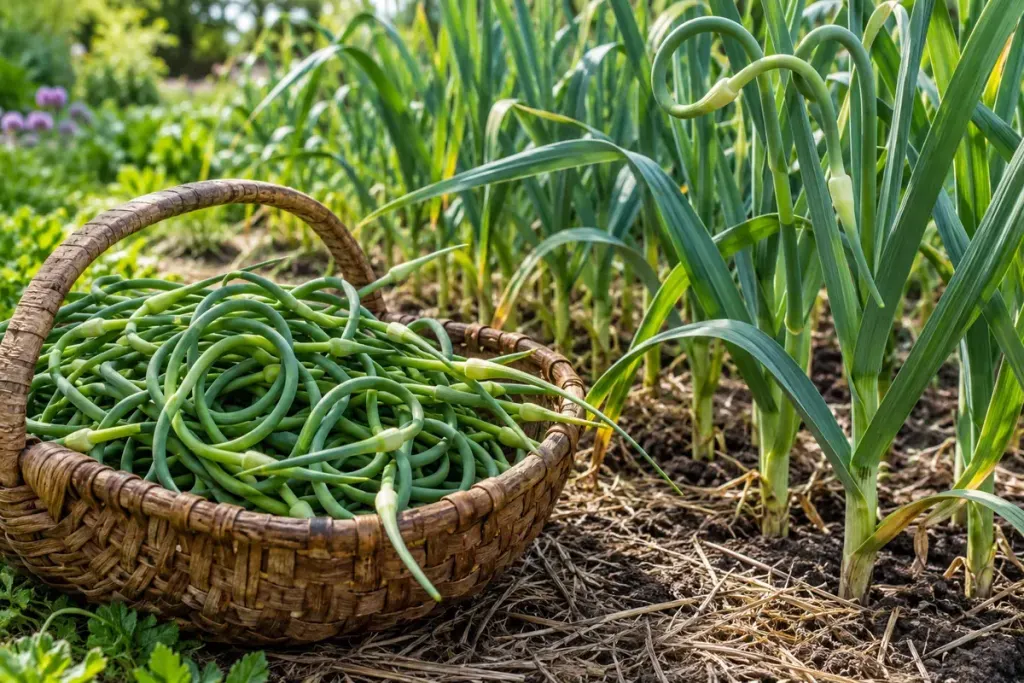
A curled stalk rises above the garlic leaves and suddenly the crop offers two different questions: should you cut the scape, and is the bulb ready to lift? They concern different parts of the plant and should not be answered as though they were the same harvest.
Iowa State University Extension describes scapes as the flower stalks produced by hardneck garlic. Its guidance discusses harvesting them while immature and beginning to curl. Calendar dates in regional advice reflect that location, so use plant development and local guidance rather than copying a month into a different climate.
Identify what you are cutting
The scape emerges from the centre of the plant and has a distinct stalk and developing tip. It is not a bundle of ordinary leaves. If identification is uncertain, compare the plant with a reliable extension photograph or ask a local grower before cutting.
Use clean, appropriate garden tools and avoid damaging the surrounding leaves. Record the variety and stage at harvest. The University of Minnesota’s garlic guidance distinguishes hardneck scapes from the later bulb harvest and provides further growing context.
Keep the bulb-harvest decision separate
Removing a scape does not mean the underground bulb has finished developing. Continue observing the crop and follow locally appropriate guidance for bulb maturity, lifting and curing. A photograph of a curled stalk cannot establish the condition of the cloves below the soil.
For kitchen use, inspect and wash the harvested scapes, then assess tenderness before choosing a preparation. A more mature stalk can be tougher than a young one. Start with a small amount in a familiar dish so you can judge its texture and flavour.
Label your notes clearly as scape harvest or bulb harvest. That small distinction makes next season’s records much more useful than a single entry saying garlic picked.