
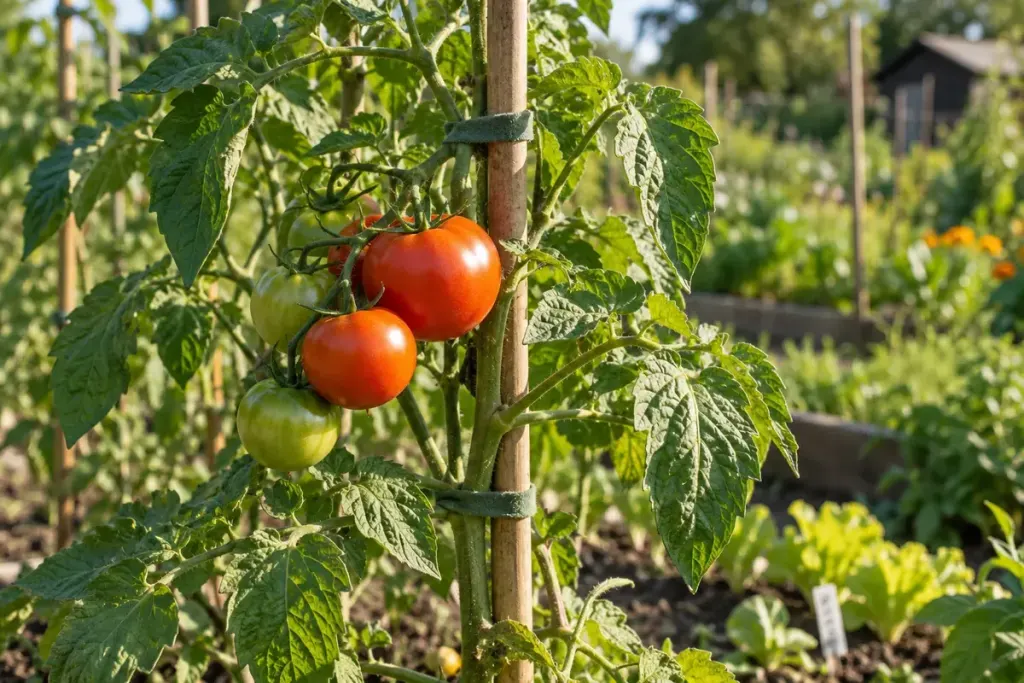
A neighbour regularly pinches shoots from their tomato plants. Yours look bushier, so it is tempting to do the same. Before removing anything, check the variety and its growth habit: not every tomato is trained in the same way.
The RHS tomato-growing guide distinguishes cordon tomatoes, generally trained as tall single-stem plants with side shoots removed, from bush tomatoes, whose side shoots should be left to grow. The plant label or seed packet is a better starting point than a pruning habit borrowed from a different variety.
Find the junction before making a decision
For a cordon plant, learn to recognise the side shoot growing at the junction between a leaf and the main stem. Do not confuse it with the whole leaf, a flower truss or the growing tip. If you cannot identify the structure confidently, leave it in place while consulting a clear horticultural guide or an experienced grower.
Look at one plant slowly before moving along the row. A mixture of varieties can otherwise become a series of repeated mistakes. Keep labels readable and record the growth habit beside each variety in your garden notes.
Make uncertainty easy to resolve
If a label is missing, photograph the plant and any remaining packaging. Ask the supplier about the variety rather than identifying its pruning needs from height alone. Growing conditions and the plant’s age can make appearances misleading.
For an invented mixed planting, a tall cordon beside a compact bush tomato needs two different care notes, even when both share a watering session. Mark the containers accordingly so another person helping in the garden does not apply one method to both.
Follow variety-specific advice for support, training and later-season care. The useful first action is not necessarily cutting: it is knowing which plant you are looking after and what growth you intend to keep.