
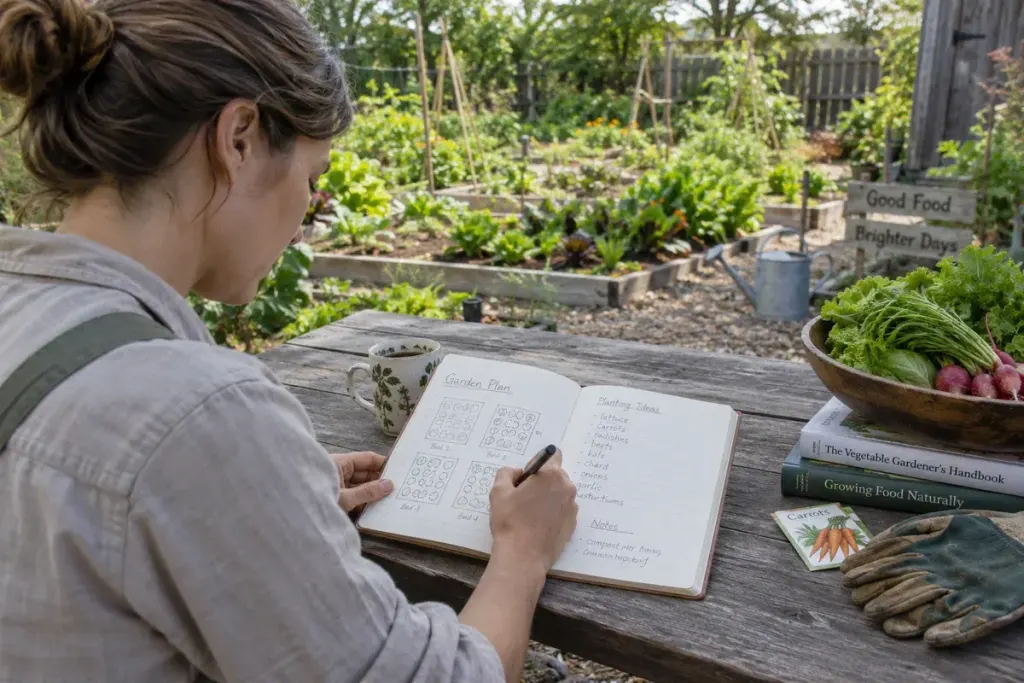
Replacing tomatoes with peppers may feel like a fresh start for a vegetable bed. Botanically, however, both belong to the same family. A useful rotation plan tracks those relationships instead of treating every crop name as a separate category.
Begin with a sketch of the growing area and record what occupied each bed during the last season. Include short crops and later sowings, not just the largest summer plants. A simple dated map is easier to maintain than a complicated system that is abandoned halfway through the year.
Group the crops before moving them
Tomatoes, peppers and potatoes are relatives; peas and beans form another familiar group. The Iowa State University guide to vegetable crop rotation explains planning by plant family and spacing returns to the same location. Use local extension advice for problems specific to your climate and soil.
Write family names beside the crops you actually grow. Then identify where each group could move next season without losing the sunlight, drainage or support it needs. Rotation is not useful if a plant is moved into a location fundamentally unsuitable for it.
A small garden has real limits
Moving a susceptible crop a short distance does not guarantee escape from pests or disease. The University of Maryland’s discussion of succession and rotation notes that disease and insect benefits can be limited at home-garden scale. Treat rotation as one part of management, alongside sanitation, appropriate varieties and sound growing conditions.
If there are only two beds, make the best feasible plan and record the compromise. You might reduce the space given to one crop family, grow a different crop or use a suitable container with an appropriate growing medium. Do not claim that a decorative change in the map has solved a persistent soil problem.
- Label each bed with the year and crop family.
- Note serious pest or disease observations separately.
- Include cover crops in the family check.
- Review the plan before buying seeds and transplants.
At harvest, add a few observations about what worked and what did not. Over several seasons, the map becomes a record of the garden rather than a set of rules detached from it. That record helps you ask better questions when a crop struggles again.