
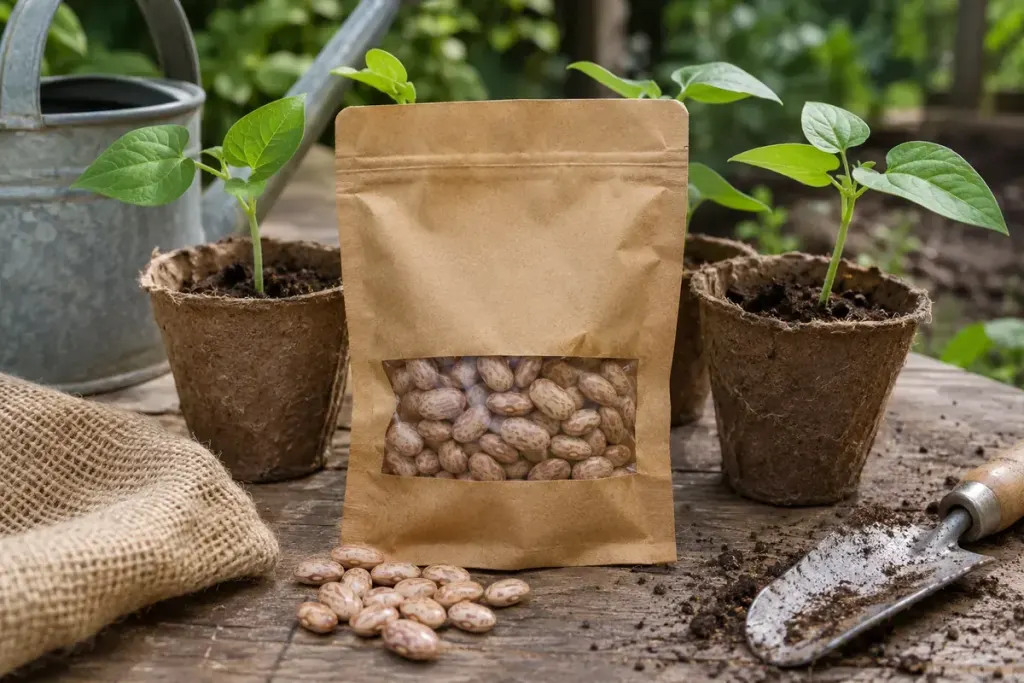
A packet described as legume inoculant is not automatically suitable for every pea, bean or clover. These products supply living bacteria intended to form a useful association with particular legumes. Choosing the right packet requires both a crop match and a product that has remained viable.
University of Minnesota Extension’s inoculation guidance explains why the appropriate rhizobia matter and why the field’s crop history belongs in the decision. Expiry and storage conditions matter too. An old packet left in unsuitable conditions is not equivalent to fresh material simply because its powder looks unchanged.
Read the packet before opening the seed
Place the crop name and variety beside the product label. Check that the intended legume is covered, then read the application method and timing. Some products are intended for particular treatment systems. Follow the manufacturer’s instructions rather than borrowing an amount or mixing method from another packet.
If seed has already received another treatment, ask the supplier whether the proposed combination is compatible and how quickly it should be planted. Keep the answer with the batch details. Compatibility cannot be established from the colour of the seed coating.
A useful planting record
Record the seed batch, inoculant product and expiry, application date, planting location and relevant soil conditions. A short note such as “same bean variety, different untreated strip” becomes useful only when the comparison was planned and both strips are otherwise reasonably comparable.
Later observations can help frame questions for an agronomist, but disappointing growth does not identify a single cause. Moisture, soil conditions, nutrition and establishment can all complicate interpretation. Avoid responding to weak plants by applying an unrelated inoculant without advice.
The purchase decision is most straightforward when it happens before sowing day. That leaves time to confirm the correct organism, obtain a usable product and arrange storage, instead of treating inoculation as a last-minute powder added to whatever seed is already in the tray.