
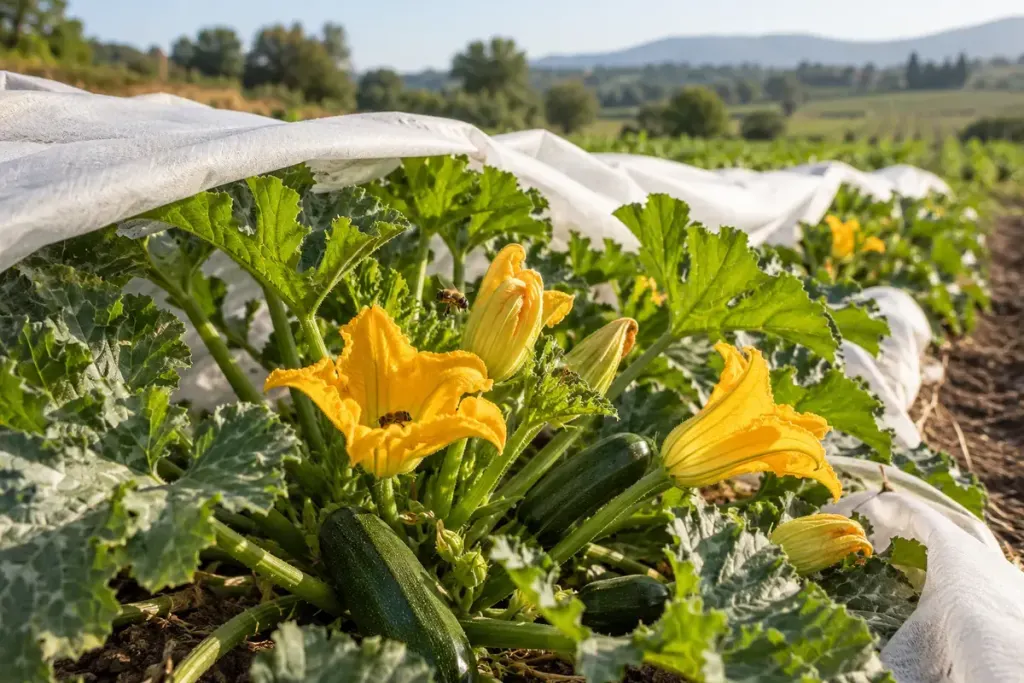
A cover that protected young vegetables can become a barrier when flowers need visiting insects. The useful removal date is therefore not always a fixed number of weeks after planting. It can depend on the crop’s development.
University of Minnesota Extension advises removing covers when insect-pollinated crops such as squash, cucumbers and melons begin flowering. The same guidance notes that covered plants can overheat and sometimes need daytime venting or removal.
Inspect for flowers, not just taller leaves
When checking a bed, look underneath the foliage and along the stems. Record the first open flowers as well as the general size of the plants. A healthy-looking canopy can distract from the change that matters for access to pollinators.
For an illustrative garden record, use three short entries: crop and variety, flowering observed, and cover action taken. A note such as “first squash flowers open; cover removed this morning” is more useful next season than “bed looked good.”
Make the decision crop by crop
Do not assume that every vegetable under fabric has the same pollination requirement. Leaf crops and varieties grown under particular production systems can need different management. Check the variety information and local extension advice before applying one schedule to an entire plot.
Removing a pest barrier also changes pest exposure. Continue inspecting the plants rather than assuming that the cover has completed all the protection they will need. Where specialist pollination or exclusion methods are used, follow the management plan for that system.
Handle the material so it can be reused
Choose a calm moment to lift and fold the cover without dragging it across tender growth. Label it with its size and any repairs needed, then store it according to the material’s instructions. That small preparation makes it easier to use appropriately later, instead of leaving a loose sheet beside the bed to catch the wind.