
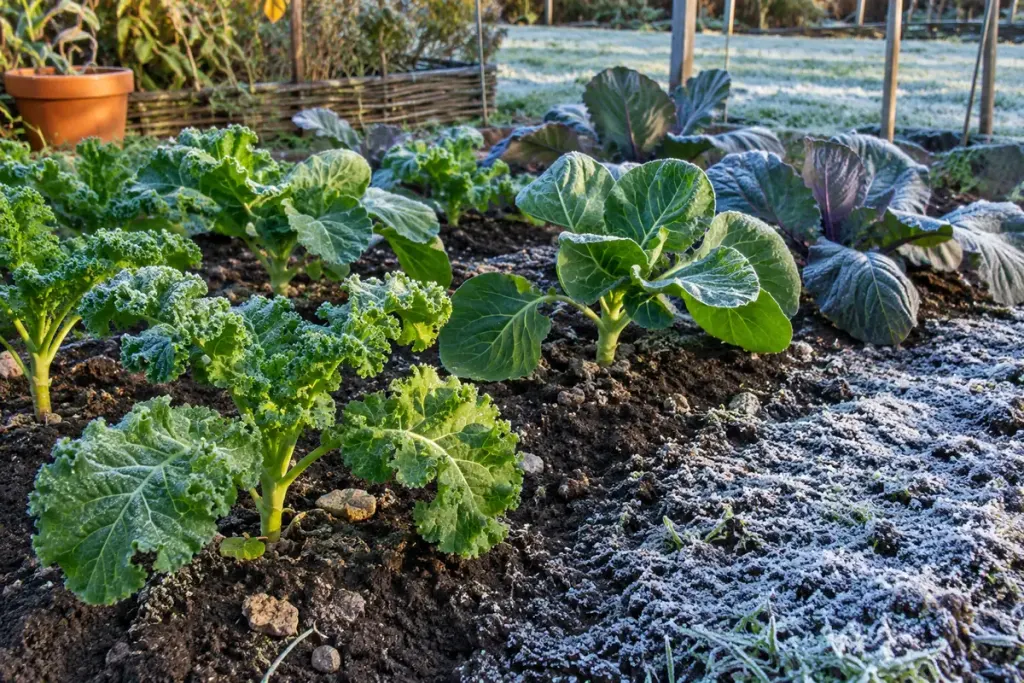
A vegetable crop can experience cold weather and later flower sooner than the grower expected. The connection may involve vernalisation: a period of suitable cold that enables or promotes flowering in certain plants. It is a developmental response, not simply visible frost damage.
University of Minnesota Extension’s cool-season crop guidance explains how cold exposure can affect the transition toward reproduction. The response varies with species, cultivar, plant age and the conditions experienced. Not every vegetable requires cold to flower, and not every cold spell has the same effect.
Distinguish the trigger from the later weather
A crop may begin obvious stem extension during warmer weather even though an earlier cold period helped prepare the change. Looking only at the week in which flowers appear can therefore miss part of the history.
The RHS explanation of environmental responses also distinguishes temperature and day-length signals. These processes can interact. “It got warm” may be an incomplete explanation for a crop’s behaviour.
Keep a development record, not just a sowing date
Record the variety, sowing and transplanting dates, approximate plant size during cold conditions, and when stem extension or buds first appeared. Include whether seedlings were bought in, because their earlier growing conditions may matter too.
Imagine two batches planted on the same day: one consists of small young seedlings, while the other has been held for several weeks. If they respond differently, the shared planting date does not make their histories identical. That is a useful question for a seed supplier or local extension adviser, not proof of a single cause.
Use crop-specific local guidance when choosing sowing windows and varieties. A timing rule from a different climate may not transfer well. If the crop is grown for seed, flowering may be wanted; if it is grown for leaves or roots, the same transition can shorten the harvest window. Understanding the intended harvest helps turn an unfamiliar biological term into a practical planning question.