
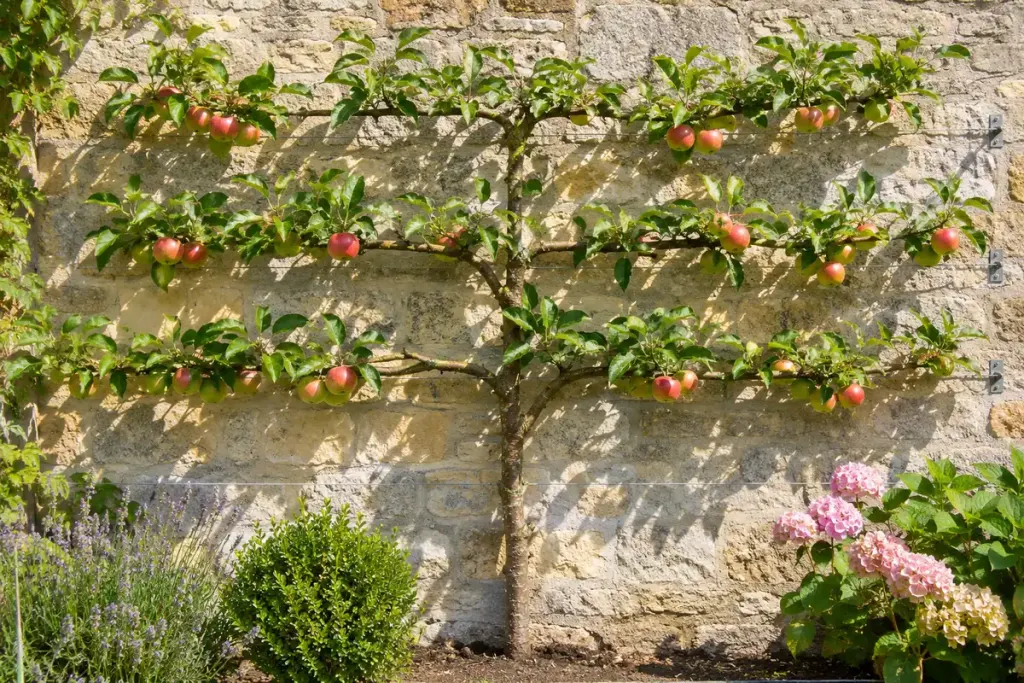
An espalier turns a fruit tree into a deliberate framework, often with a vertical stem and horizontal tiers. The shape can make fruit growing possible in a narrow space, but it takes planned support and repeated training rather than one dramatic pruning session.
The Royal Horticultural Society’s starting guide explains why cultivar and rootstock choice matter. Apples and pears differ in where they bear fruit, and a variety’s fruiting habit affects how readily it fits the intended form.
Draw the mature framework first
Before choosing a young tree, sketch the space available for its final width and height. Include paths, windows, downpipes and the room needed to reach the branches. A support that fits a newly planted tree may be inadequate for the eventual framework.
Check the site’s light, soil and exposure, then ask a knowledgeable nursery which combination of cultivar and rootstock suits those conditions and the available space. A pre-trained tree can offer a head start, but it still needs suitable planting and subsequent care.
Training and pruning do different jobs
Training guides the direction of selected shoots. Pruning manages growth and the fruiting framework. The RHS provides separate guidance on espalier pruning and training, including the distinction between developing a young structure and maintaining an established one.
For a simple observation routine, photograph the tree from the same position through the growing season. Mark which branches form the permanent framework and which new shoots you are considering. This helps you discuss a specific decision with an adviser rather than cutting first and trying to reconstruct the shape afterwards.
Inspect ties regularly as branches thicken, and avoid forcing stiff growth into an abrupt bend. The appropriate timing and pruning approach depend on the tree, its stage and local conditions.
A successful espalier is a long-term agreement between the tree’s growth and the space you can provide. Its neat outline is the result of ongoing care, not evidence that the tree needs less attention.