
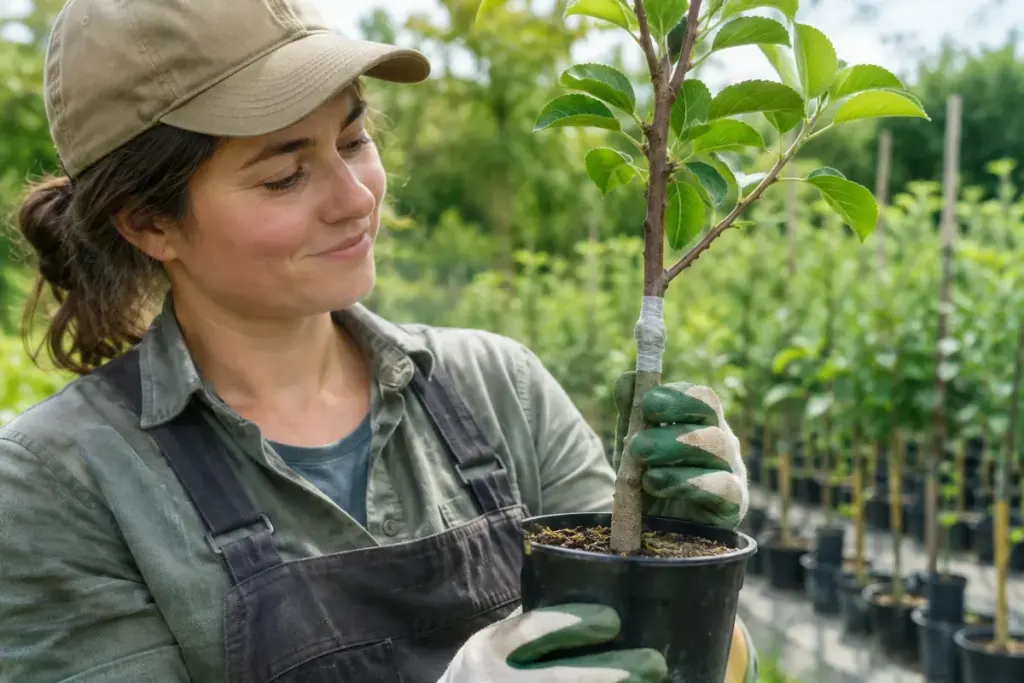
A fruit-tree label may name both a variety and a rootstock. Those are not two alternative names for the same thing. They identify different parts of a grafted plant and help explain why the same fruit variety can be sold in trees with different growing characteristics.
The University of Minnesota’s grafting chapter describes the scion as the selected shoot material joined to a rootstock. The parts grow together while retaining their genetic identities. Grafting is not the same process as producing a new variety by crossing two plants through seed.
Ask what each part contributes
The scion provides the selected above-ground variety. Rootstock choice can influence characteristics such as vigour and adaptation, depending on the crop and combination. Compatibility matters; putting two desirable plants together does not guarantee a successful union.
Mississippi State University Extension explains the role of compatible rootstocks and why named clonal rootstocks can offer known characteristics. Recommendations remain crop- and location-dependent, so a list from one region is not automatically a planting prescription for another.
Read a nursery label as a pair
Imagine two fictional labels offering the same apple cultivar on different rootstocks. Ask the nursery how their expected size, support needs and site suitability differ. A description of the fruit’s flavour does not answer those questions.
Keep both names in your planting record, together with the supplier and planting date. If the tag becomes unreadable later, that record is more useful than a photograph of the fruit alone. Ask for crop-specific guidance on locating the graft union and planting depth rather than using a universal rule from an unrelated species.
Observe growth from the correct place
When a shoot appears low on the plant, note where it originates relative to the union and ask for identification if uncertain. A vigorous shoot is not automatically the part you intended to cultivate.
Understanding the partnership makes a grafted tree easier to discuss with a nursery or adviser. The key purchase question becomes: “Is this scion–rootstock combination suitable for my site and intended use?” That is more informative than choosing by the fruit variety alone.