
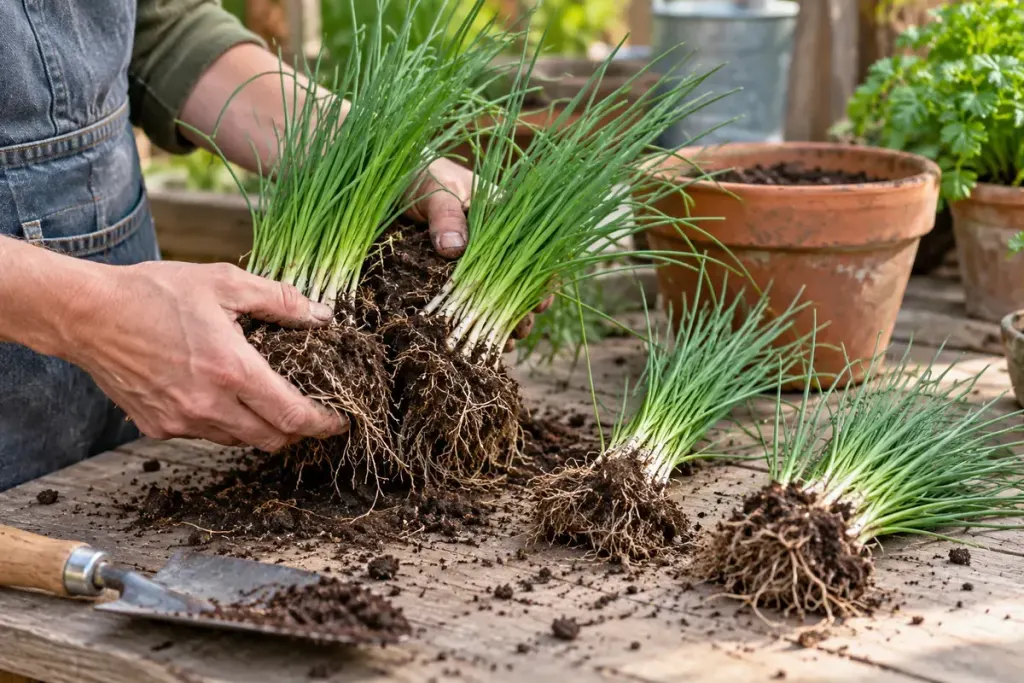
A pot of chives can become a tight mass of leaves and roots. Dividing an established clump gives you smaller rooted plants to replant, instead of trying to keep the whole crowded mass in the same space indefinitely.
The RHS guide to growing chives describes lifting and dividing established clumps in spring or autumn in UK growing conditions. Choose a suitable period for your own climate and avoid treating a month name from another region as a universal instruction.
Prepare the destinations first
Have suitable pots or a prepared growing area ready before lifting the plant. Check drainage and allow space for the divisions to grow. Labels are useful if you are dividing more than one herb; do not rely on remembering which small clump came from which pot.
Work with a healthy established plant. If the roots or leaves show an unexplained problem, identify it before distributing sections to other gardeners. Dividing a plant is not a treatment for every cause of weak growth.
Keep roots with each section
Lift the clump carefully and separate it into manageable portions that retain roots and growing shoots. Handle it gently and avoid leaving exposed roots drying in sun or wind. Replant at an appropriate depth, firm the growing medium carefully and water according to the conditions.
For a small home trial, divide one crowded pot rather than every plant at once. Keep a note of when it was done, where the sections went and how they establish. This makes it easier to adjust your local timing next season.
Let establishment come before a heavy harvest
Watch the moisture around the roots and the new growth. A freshly moved section does not need to be harvested as heavily as a settled clump. Avoid compensating for temporary stress with indiscriminate fertiliser or constant watering.
If sharing a division, give the recipient the plant name and the basic growing conditions it has been used to. A rooted piece with a clear identity and a little time to recover is a more useful gift than an oversized clump lifted at the last moment.