
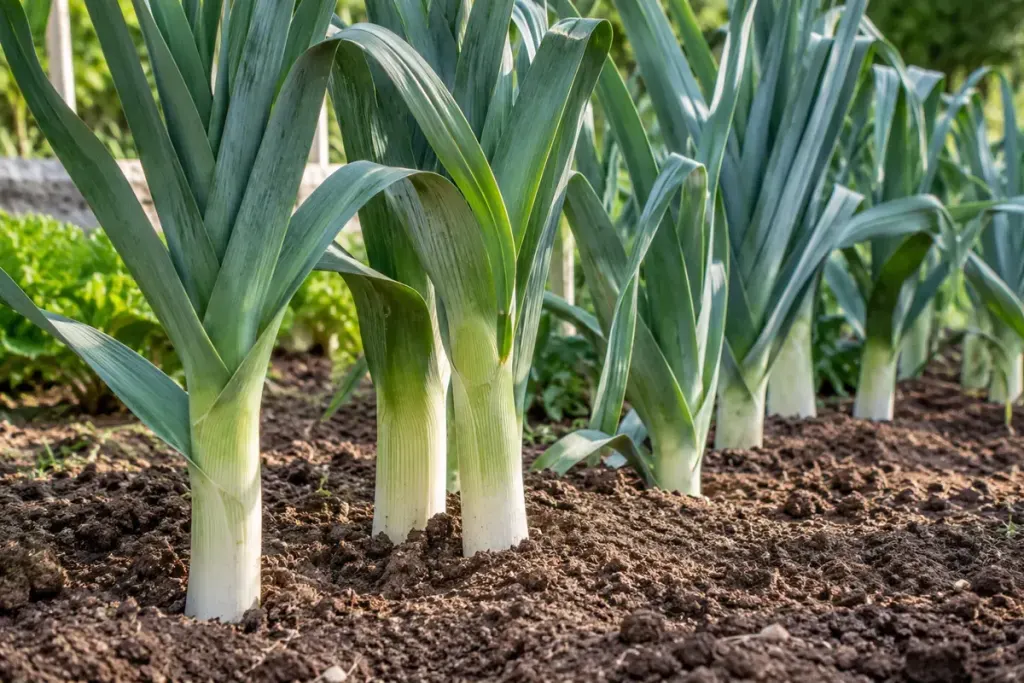
In a recipe, blanching usually involves a brief cooking stage. In the leek bed, the same word describes a different operation: keeping light from part of the plant so that a longer pale base develops. No boiling water belongs in the growing bed.
The RHS guide to growing leeks describes earthing up around developing plants to encourage the characteristic white shank. Planting method, variety and growing conditions also affect the crop, so blanching should sit within a complete cultivation plan.
Work around the base, not into the leaves
Inspect the row before moving soil. Identify the lower stem and the point where the leaves separate. Keep soil from being pushed into the leaf folds, where it creates an awkward cleaning problem at harvest. Avoid burying the plant indiscriminately in pursuit of a longer white section.
Follow the spacing and planting guidance for the variety and your growing conditions. A crowded row makes it harder to work carefully around each plant. Do not compensate for poor establishment by adding more soil without checking the rest of the growing routine.
Keep a small comparison record
For a home-garden trial, note the variety, planting date and when you earthed up. At harvest, photograph a cleaned representative leek beside a ruler and record the length of the pale section. Describe the conditions too, especially if comparing crops from different seasons.
This does not prove that one action caused every difference between plants. It does give you a more useful record than remembering that last year’s leeks looked longer. Keep cooking quality and usable yield in the notes rather than judging the crop only by its colour.
When taking the leeks to the kitchen, clean between the layers carefully as your recipe requires. The gardening operation and the kitchen preparation solve different problems: one manages light during growth, while the other prepares the harvested vegetable for eating.