
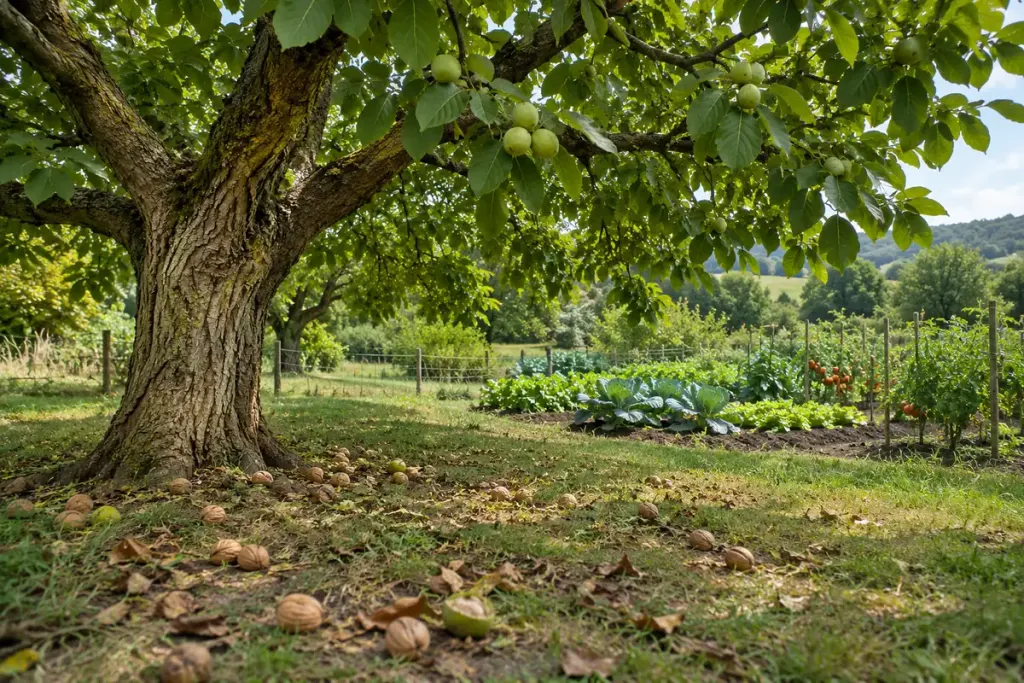
A plant struggling beside a tree may be short of light, water or rooting space. In some situations, chemicals associated with another plant can also affect growth. Allelopathy is the term used for that kind of chemical influence between plants.
Black walnut is a familiar example. Penn State Extension’s guidance discusses juglone and the sensitivity of some nearby plants. The example is useful, but it should not become a shortcut that blames every weak plant near a walnut on one chemical.
Start with a site description
Identify the tree accurately and note where the struggling plants sit relative to it. Record sunlight, soil drainage, irrigation and the timing of symptoms. A dry root zone beneath a canopy can create a different problem from a wet, poorly aerated planting area.
Compare affected plants with similar plants elsewhere, while remembering that the sites may differ in several ways. A single comparison can suggest a question; it rarely proves a mechanism.
Before replacing plants, ask a local extension service or qualified adviser which species and site arrangements are appropriate. Lists of tolerant plants can be helpful starting points, but local conditions and plant identity still matter.
Do not turn a natural process into an improvised treatment
The fact that a plant produces a growth-affecting substance does not make homemade extracts a safe or reliable weed-control product. Avoid experimenting with concentrated plant materials around food crops, waterways or neighbouring gardens without sound guidance.
Likewise, removing a tree does not necessarily remove every relevant influence immediately. Roots and other plant material remain, while the site’s light and moisture conditions also change. A new planting plan needs to consider the whole area rather than one dramatic action.
A useful growing notebook separates observations from explanations. Write “tomatoes wilted in this bed after this date” before writing “juglone caused the problem.” That discipline leaves room for soil, disease and water-related checks.
Allelopathy adds an important possibility to plant diagnosis. It is most useful when it broadens the investigation rather than replacing it.