
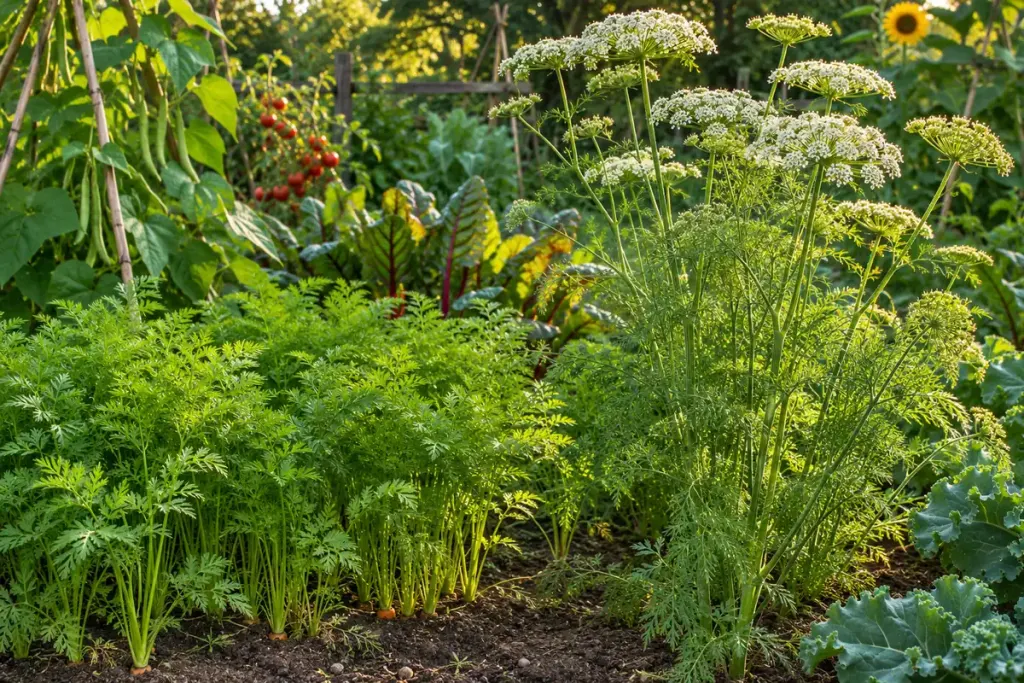
A carrot pulled for dinner has completed the part of its life most gardeners are interested in. It has not completed the usual seed-producing cycle. Carrots are biennials: the familiar root develops in the first season, while flowering and seed production normally come later after the required seasonal conditions.
That means seed saving starts before the entire crop is harvested. You need suitable plants to carry into a second season, space for their flowering growth and a plan appropriate to your climate.
Seed Savers Exchange’s carrot guide explains the distinction between growing carrots for roots and maintaining them for seed. It also discusses overwintering and isolation from other carrot varieties. Local cold, wet conditions and the variety all affect which approach is practical.
Write the second season into the bed plan
A useful garden note includes the variety, sowing date, selected plants and their intended overwintering location. Mark the plants clearly so another person does not harvest them during a routine tidy-up.
Do not reserve just one unusually attractive root and assume it will preserve a variety. Population size and pollination affect the seed you obtain. Advice intended for maintaining a rare variety can call for more plants and more careful isolation than a casual experiment.
The Organic Seed Alliance’s seed-saving guide covers biennial crops and crop-specific considerations. Use those details to decide whether your space can support the project before committing a bed for another season.
Separate an experiment from a reliable seed supply
For learning, you can record what flowers, when insects visit and whether mature seed forms. Label the resulting seed honestly if its parentage or isolation is uncertain. A packet date alone does not establish that the next crop will match the parent variety.
Growing one plant through a full life cycle is a rewarding observation exercise. Producing dependable seed asks for a broader plan: enough suitable plants, successful overwintering, appropriate pollination control and careful harvesting. The extra season is part of the crop, not an inconvenient delay after it.