
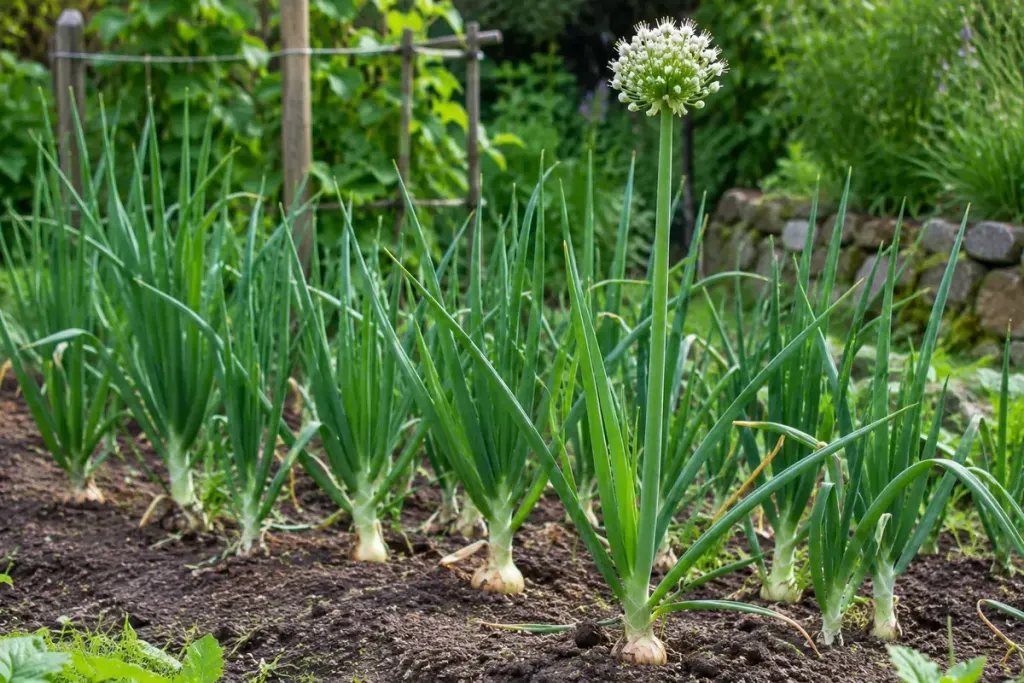
An onion sends up a firm central stalk with a developing flower head while the surrounding plants are still making bulbs. This is bolting: the plant has moved into reproductive growth earlier than the grower wanted for a bulb crop.
The Royal Horticultural Society’s advice on bolting explains that biennial vegetables, including onions, can initiate flowering in their first year. Temperature and growing conditions matter. The response is more useful when it begins with identifying the stalk and the crop’s history, rather than assuming every tall leaf is a flower.
Mark affected plants before harvest
Flag the onions that have bolted so they remain distinguishable when lifted. Ask a local extension adviser how best to use sound affected bulbs in your growing conditions; do not automatically mix them into a lot intended for long storage.
Removing a flower stalk does not rewind the plant’s development. It may be part of local crop-management advice, but it should not be presented as a guarantee that the onion will behave like an unaffected storage bulb.
Keep a record that helps next season
Note the variety, whether the crop began as seed, transplants or sets, planting date and any marked cold periods. Photograph the affected plants beside unaffected ones. Record roughly how many plants bolted rather than describing the whole bed as a failure after noticing two stalks.
The RHS mentions heat-treated onion sets as one option where bolting repeatedly causes problems. Suitability still depends on the region and crop schedule. Choose varieties and planting guidance for your locality instead of copying a calendar written for a different climate.
Finally, separate bolting from ordinary harvest maturity. Leaves falling over and drying are not the same observation as a developing flower head. Naming the change accurately makes the next decision—harvest, use, storage or advice-seeking—much clearer.