
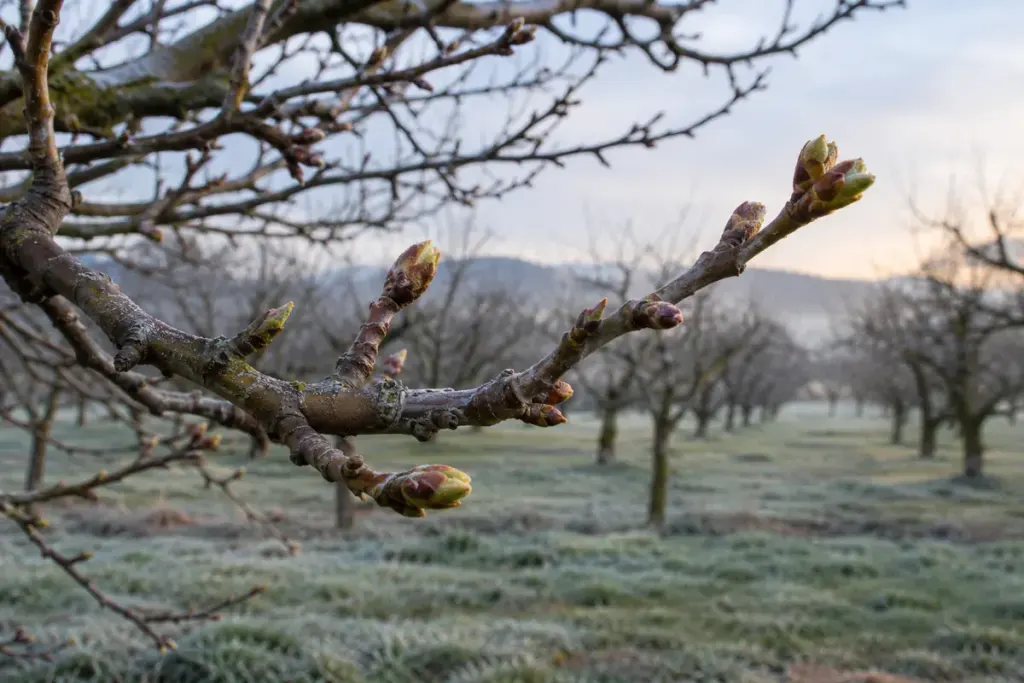
A fruit tree can survive a winter yet struggle to flower normally the following season. Cold tolerance and winter chilling requirements answer different questions. The first concerns surviving conditions; the second concerns the cold exposure associated with dormancy and subsequent growth.
University of Georgia Extension explains how winter cold affects fruit crops and notes that requirements vary among species and cultivars. A variety name therefore matters more than a broad label such as “apple” or “peach.”
Read the number with its model
Chill hours are one way of describing accumulated cold exposure, but they are not the only model. Do not compare a nursery’s chill-hour figure directly with a local report expressed in chill portions as if the units were interchangeable.
Before purchasing, ask which model the cultivar recommendation uses and whether local extension or horticultural services consider it suitable for the site. A hardiness-zone label alone does not answer that question.
Make a small site-and-cultivar record
Put the proposed cultivar, its documented requirement, the local source of climate information and any pollination needs on one page. Record where the tree will actually grow, including elevation or exposure differences that local advice considers relevant.
For an imagined orchard comparison, two growers may live in the same wider region but garden at different elevations. A recommendation made for one location is a lead to investigate, not a guarantee for the other. Likewise, one unusually cold winter is a poor substitute for understanding the site’s typical range of conditions.
A low-chill cultivar is not automatically the safest choice everywhere. The timing of dormancy release and flowering also interacts with local weather, including damaging cold after growth starts. Seek a locally appropriate recommendation rather than simply choosing the smallest number on the label.
Once planted, keep seasonal notes on bud development, flowering and fruit set. Those observations can support advice in later years without assuming that every disappointing crop came from insufficient chill. Water, pollination, pests and other growing conditions still need consideration.