
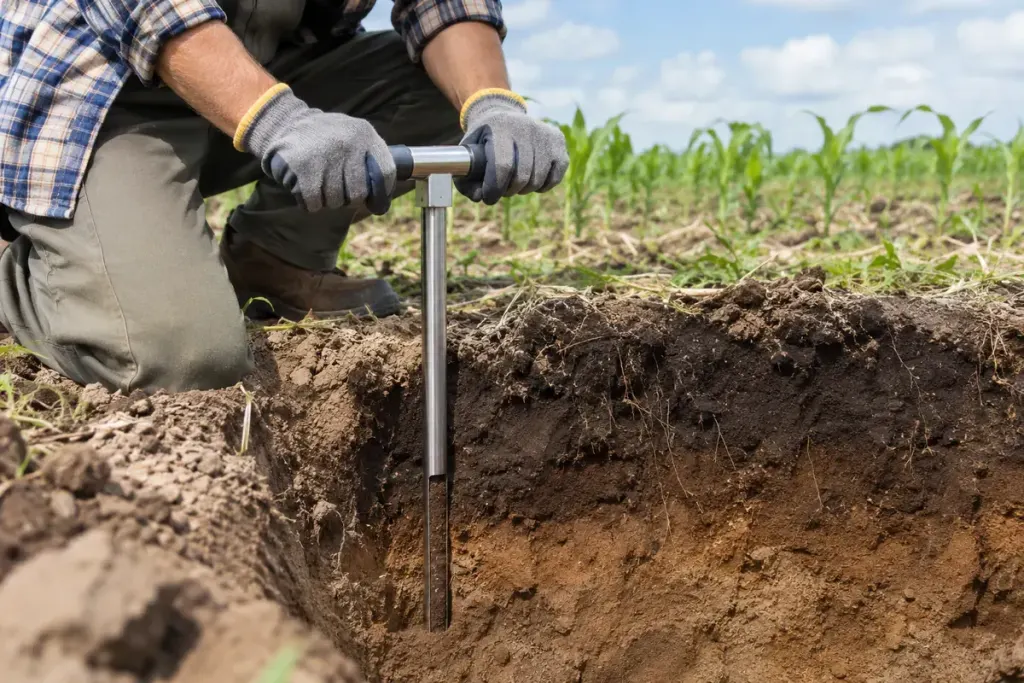
A probe that is hard to push into the ground seems to give an obvious answer: the soil is compacted. But dry soil can also resist penetration. The reading needs the conditions that produced it.
Penn State Extension’s penetrometer guidance explains why soil moisture matters when using resistance as an indicator of compaction. The tool is useful for locating resistant layers, but an isolated push into an unusually dry patch is not a reliable map of the whole field.
Record depth and conditions together
Identify the instrument, tip and scale being used, then follow its operating method. Note the soil’s moisture condition and the depth at which resistance changes. A reading without depth loses much of its practical meaning: a surface crust and a deeper resistant layer present different questions.
Compare several locations, including suspected traffic areas and a suitable reference area. For example, if you are investigating a headland, do not compare it with a distant patch after different rainfall and call the difference a controlled test. Try to keep the comparison conditions similar.
A simple field sheet can record location, recent weather, depth pattern and visible crop or root observations. Mark stones or other interruptions rather than treating every sudden stop as a continuous compacted layer.
Do not let the gauge choose the remedy
Penn State’s discussion of dry-season compaction decisions separates diagnosis from the conditions appropriate for mechanical work. The best time to interpret a resistance measurement is not automatically the best time to carry out a treatment.
Before committing to deep cultivation, discuss the evidence with a qualified agronomist or local extension adviser. Crop response, drainage, soil type and the source of traffic all affect what action makes sense. Repeatedly disturbing a field without changing the cause may leave the same problem waiting for the next season.
The penetrometer is most valuable as part of a record you can revisit. Consistent observations let you ask whether the same layer and pattern persist, rather than allowing one difficult push on one dry afternoon to decide the management plan.