
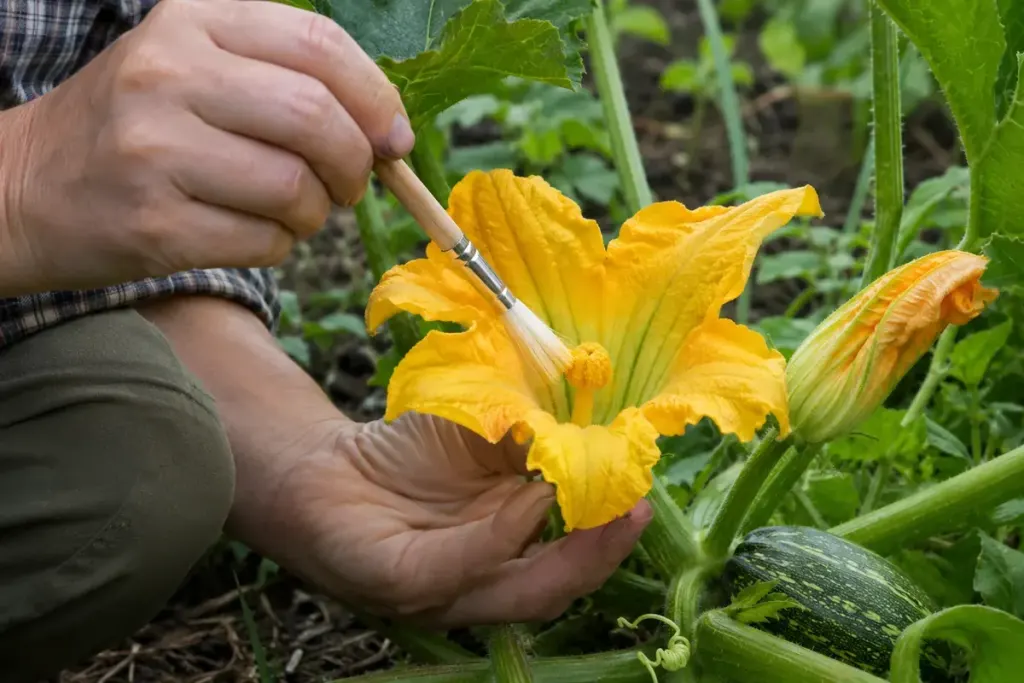
A squash plant can produce plenty of yellow flowers and still disappoint at harvest. Before reaching for a brush, establish which flowers are open and whether the plant needs help moving pollen. Hand pollination addresses pollen transfer; it cannot correct every reason a young fruit stops developing.
Male squash flowers generally sit on a comparatively narrow stalk. A female flower has an ovary behind the blossom that resembles a tiny version of the fruit. The University of Minnesota’s summer-squash guide explains the crop’s flowering and pollination needs. Early male flowers alone are not evidence that the plant has failed.
Work with a newly open flower
The RHS describes hand pollination for these crops. Choose a morning when a suitable male and female flower of the same crop are open. With a clean, soft brush, gently collect pollen from the male flower’s anther and transfer it to the receptive stigma inside the female flower. Avoid tearing the petals or pressing on the developing ovary. If you cannot confidently identify the structures, use a crop-specific illustrated guide before attempting it.
A small garden record makes this more informative than treating every blossom at random. Note the date, plant and flower you worked on, then observe whether the young fruit continues growing. Mark the location without tying anything tightly around a stalk.
For ordinary fruit production, this is different from maintaining a named variety for seed saving. If you intend to save seed, compatibility, isolation and controlled pollination require a more deliberate plan.
Keep the rest of the plant in view
Minnesota Extension’s discussion of limited fruit set considers both pollination and conditions that affect fruit development. Heat, water stress and other growing problems can complicate the picture. A brush is not proof that these have been resolved.
Continue appropriate watering and general crop care, and protect visiting pollinators by following product labels and local integrated pest-management advice. Do not repeatedly disturb flowers that bees are already visiting effectively.
After a few observations, compare treated flowers with the rest of the plant cautiously. A successful fruit is encouraging, but weather and plant development also change over time. The most useful outcome is learning when pollen transfer is plausibly limiting your crop, rather than making hand pollination a compulsory daily ritual.