
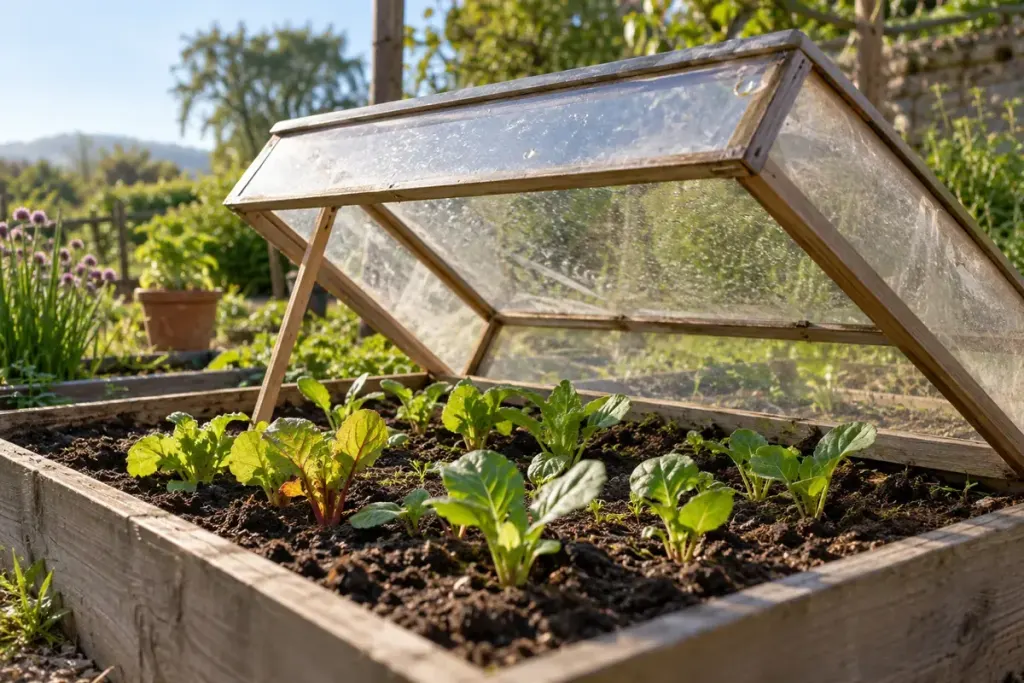
A cool morning can encourage you to leave a cloche firmly closed over young plants. A few hours of sunshine can create a different environment beneath it, even when the air outside still feels mild. Protection needs a ventilation routine as well as a place in the bed.
The RHS guidance on cloches explains their warming and sheltering effects and describes ventilation by opening vents or lifting a side. The appropriate adjustment depends on the crop, weather and type of cover. A clear rigid cloche does not behave exactly like a fleece tunnel.
Make the midday check part of the plan
Before leaving for the day, consider the forecast and whether someone can inspect the plants later. Check the air and soil beneath the cover rather than judging only from outside. A suitable thermometer can help you notice how quickly conditions change, but the plants’ condition and the crop’s needs still matter.
Open the designed vents or use a secure arrangement recommended for the cloche. Do not balance a heavy cover precariously on an object that can slip. Keep enough shelter for the current conditions while allowing excess heat and moisture to escape.
Check moisture at the roots separately. Rain falling on a closed cover may not water the soil underneath. Conversely, a damp surface does not always describe the whole root zone. Adjust watering to the plants and soil instead of adding a fixed amount merely because the cover is open.
Plan the move out of protection
Plants grown in sheltered conditions can need gradual exposure before the cover is removed permanently. Follow crop-specific hardening-off advice and avoid making the first uncovered day unusually windy or bright. For flowering crops that need insect pollination, consider how and when pollinators can reach the flowers.
Keep a brief note of opening, closing and watering decisions during a changing week. It can reveal that the same sunny interval repeatedly causes trouble.
A cloche is a small growing environment, not simply a lid. Using it well means responding to what happens underneath as the day develops.