
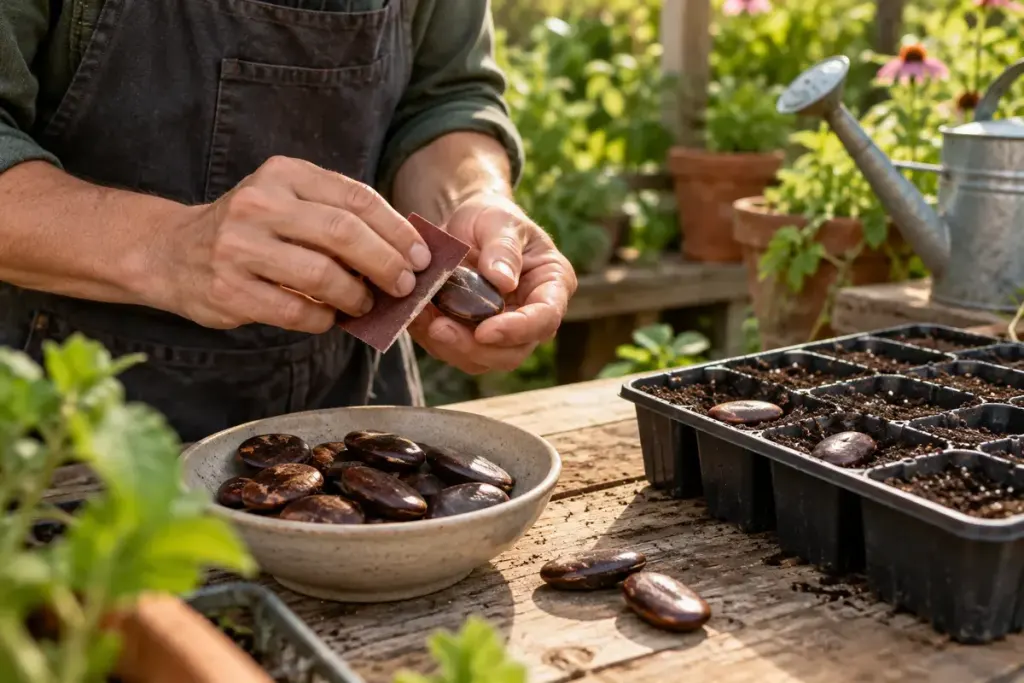
A seed that has not germinated is not automatically asking to be scratched. It may need a particular temperature, a period of cold, more time, or simply suitable growing conditions. Scarification is relevant when a resistant seed coat is the barrier that needs addressing.
University of Wisconsin horticulture guidance distinguishes physical seed-coat barriers from physiological dormancy. Roughening the outer coat can help some species take up water; it is not a universal substitute for the other conditions a seed requires.
Check the species name and supplier’s germination guidance. Similar-looking seeds can require different treatment. If the instructions call for mechanical scarification, follow their method and extent rather than cutting deeply because the coat appears tough.
Do not transfer an acid or hot-water method from a specialist protocol into casual home practice. Those procedures are species- and method-dependent. Seek suitable horticultural advice if the packet is unclear or the seed has no reliable identification.
Keep a small comparison
Where the species guidance supports it, set aside a small, labelled group for the specified treatment and a comparable untreated group. Give both the same appropriate growing conditions. Record the number sown and the dates rather than relying on which tray looks greener at a glance.
This is a learning exercise, not a formal proof from a handful of seeds. Different seed viability or an uneven tray position can affect the outcome. The value is in making your next attempt more informed.
Handle treated seeds carefully and sow or store them as directed. Once the coat has been altered, leaving them in an improvised damp container for days may create a different problem from the one you were trying to solve.
If germination remains poor, review the full chain: seed identity, age, storage, treatment and growing conditions. A deeper scratch is not the automatic next step. Understanding which barrier the treatment addresses is more useful than adding another technique to every packet.